
The Evolution & Myth of the ‘Cool Girl’: How ADHD girls learn to disappear (and what it costs them)
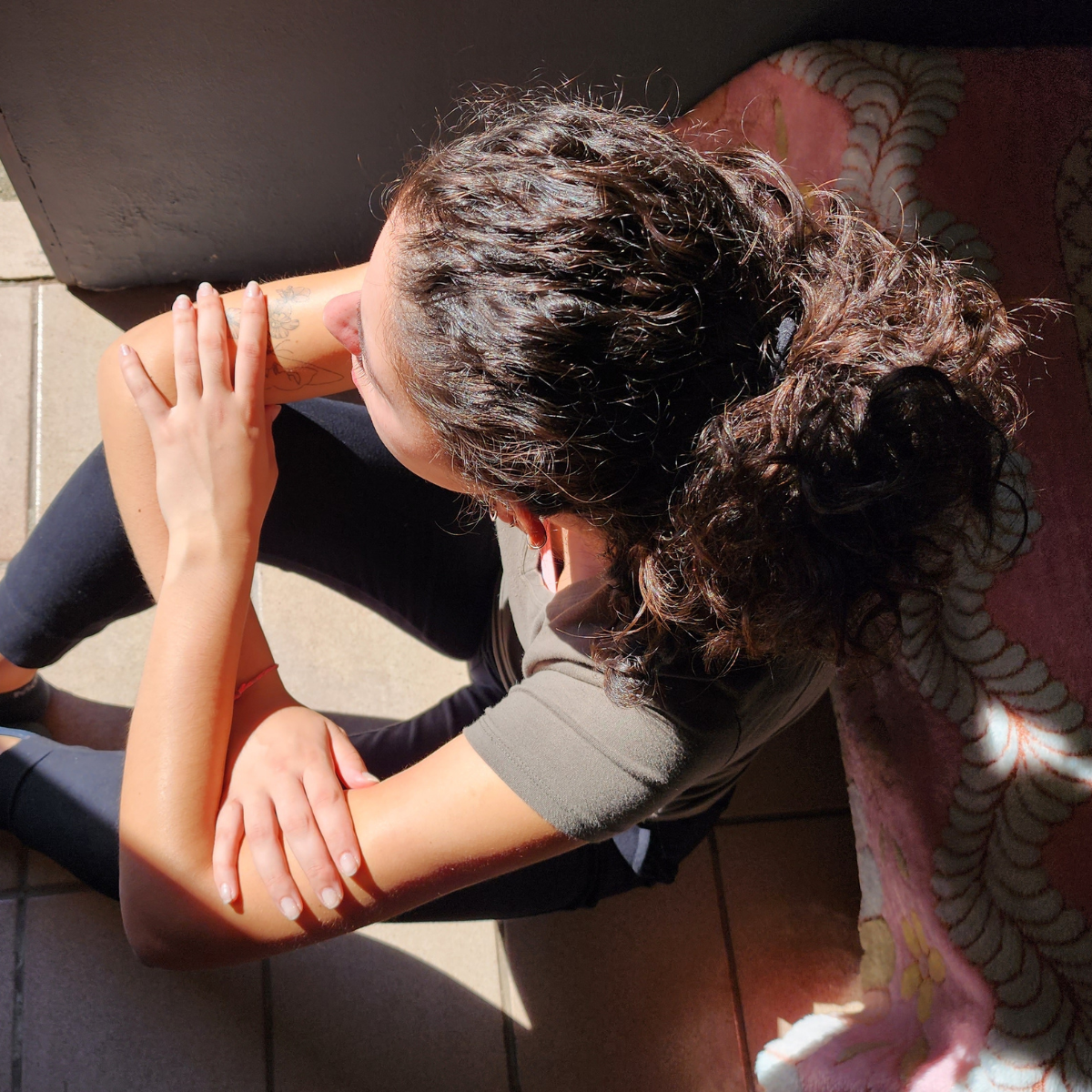
Her voice didn't disappear all at once.
She had always been a little outside the centre of things.
Branded as "shy" from an early age, she had a hard time finding her footing around the popular girls. But she had still found her people. The ones who didn't mind that she talked too much about the things she loved, or that she cried when an animal got hurt, or that she still wanted to play imaginary games long after most kids had moved on to other things.
As a young child, she had been fully, unapologetically herself. Bare feet. Messy play. Strong feelings about fairness. She loved deeply, noticed small details, and never quite felt at the centre of things.
Life had a texture then. A richness. She didn't know yet that any of this was unusual.
But somewhere around fifth grade, something shifted.
She began to notice the kids around her differently. Not just as people she liked or didn't like, but as a social landscape she needed to learn to read. She was tired of being the shy one, the one who didn't quite fit, the one who always felt like she had arrived at the party slightly wrong. She wanted to feel part of something. She wanted to stop being on the outside looking in.
And she started to notice things.
The kids who seemed most accepted didn't talk about their toys anymore. Imaginary play was for little kids, and she understood implicitly, without being told directly, that her version of herself needed to be updated. She began paying attention to the music the popular girls listened to, the clothes they wore, the shows they watched, the things they found funny. She filed it all away carefully. She began to mirror it back.
It was working. A little. Enough to keep trying.
But then came a subtler lesson. One that would take longer to understand.
She had opinions. Strong ones. About the friend who had been left out, the plan that wasn't fair, the thing that had just been said that didn't sit right with her. And more than once, when she said what she actually thought, something in the room shifted. A look exchanged. A conversation that moved on without her. The particular silence that meant she had said too much, or said it wrong, or simply taken up more space than the room could hold.
She wasn't trying to cause problems. She was just being herself.
But being herself kept getting her into the same trouble.
So she started watching more carefully.
She noticed which girls moved through social spaces without friction. The ones who were described as easy to be around, who were invited to everything, who people seemed genuinely relieved to see. They didn't push back. They didn't have strong opinions about things that didn't matter, or even about things that did. They went along. They deferred. They laughed at the right moments. They made other people feel comfortable simply by not needing much themselves.
She didn't have a name for it yet. She just knew it worked.
And so, slowly, without really deciding to, she began to make herself smaller.
She put the dolls away. She learned to hesitate before she spoke, to check the room before she shared an opinion, to swallow the thing she was about to say and offer something softer instead. She learned to agree when she didn't agree, to laugh when she wasn't sure something was funny, to make herself a little less of whatever had made people uncomfortable before.
It worked. Not completely, not always, but enough. Friendships felt less fragile. She got invited. The "shy" label began to soften.
And somewhere in that process, something else happened too. She started to lose track of what she actually thought. What she actually wanted. Who she actually was when nobody was watching.
She had discovered the cool girl myth. And she had decided, without anyone telling her, to become her.
She was getting better at it. She just didn't realise yet what it was costing her.
If you recognise yourself in this story, you are not alone. And there is a good chance nobody around you recognised what was happening either.
This is one of the most common developmental arcs for girls with undiagnosed ADHD. Not the hyperactive child bouncing off the walls, but the sensitive, imaginative, emotionally intense girl who felt things deeply, struggled socially in ways that were hard to name, and gradually learned to manage herself into something more palatable. The sensory richness of early childhood, the fierce empathy, the hyperfocus on imaginary worlds, the difficulty reading the unspoken social rules of the popular group: these are all hallmarks of the ADHD nervous system in a girl who hasn't yet been given a map for how her brain works.
Because she appeared to be coping, because she was effortful and adaptable and increasingly agreeable, she didn't raise flags. She didn't get referred. She got described as shy, or sensitive, or a little intense, and she carried on quietly building a version of herself that the world seemed to prefer.
That is not a story about weakness. It is a story about a highly intelligent nervous system doing exactly what it was shaped to do: find the path to belonging.
What Is the Cool Girl Myth?
The cool girl myth is a learned social strategy where girls minimise their needs, opinions, and emotional expression to gain acceptance and reduce rejection. For girls with ADHD, it often becomes a survival pattern that starts in adolescence and carries forward into adulthood.
The cool girl is easy-going. She doesn't make a fuss. She doesn't have needs that inconvenience anyone. She finds everything funny, agrees with most things, and never makes you feel like you've said the wrong thing. She's fun to be around because she doesn't require much.
She is, in many ways, a girl who has learned to disappear.
The cool girl isn't a personality type. She's a survival strategy. And for girls with ADHD, the pressure to become her often starts earlier, runs deeper, and carries far higher costs than most people around them ever realise.
Research published in a 2023 systematic review found that girls with ADHD are at higher risk of social judgment when their behaviour violates feminine norms, including expectations around being organised, agreeable, emotionally contained, and quiet. To avoid those social sanctions, many girls with ADHD exert considerable effort to mask their natural presentation, suppressing impulsivity, containing emotional intensity, and moulding themselves around what the social environment seems to reward.
A 2024 qualitative study on women's experiences of late ADHD diagnosis described this directly: girls are more likely to be socialised into normative feminine behaviours, with an emphasis on pleasing others, which results in high levels of masking of neurodivergent traits in order to fit in.
What this looks like in real life is not dramatic. It doesn't announce itself. It looks like a girl who is learning, one social situation at a time, that the version of herself who speaks freely is a version that gets her into trouble. And that the version who is easier, softer, smaller, is the one that people seem to want.
Why Are ADHD Girls More Likely to Develop People Pleasing Patterns?
ADHD girls receive more frequent social feedback that their natural traits are too much, which over time shapes a pattern of adapting themselves to reduce rejection. This is not a character flaw. It is a nervous system response to a social environment that consistently corrects their authentic expression.
Every girl navigates social pressure. But for girls with ADHD, the feedback is louder, more frequent, and starts earlier.
The ADHD brain is wired for intensity. It feels things fully. It speaks before it filters. It notices injustice quickly and responds to it. It has opinions that arrive with energy, ideas that come in fast, emotions that are harder to contain than the social script suggests they should be.
In a world that rewards girls for being agreeable, composed, and easy, this brain gets corrected. A lot.
Not always overtly. Often it's the subtle social accounting that girls are so skilled at reading: the slight withdrawal, the look, the shift in the group's energy. Over months and years, a very clear message accumulates. Your natural self is too much. The version of you that is liked is the one that costs you something to maintain.
Research on women who received late ADHD diagnoses consistently describes this exact arc. Women in a 2025 study on adverse experiences of undiagnosed ADHD described spending years internalising criticism, developing disconcertingly low self-esteem, and building coping strategies of self-suppression that were so effective they helped delay their own recognition and diagnosis.
One participant in a 2023 study on women's ADHD experiences said simply: before her diagnosis, she just thought people pleasing was who she was.
That sentence carries a weight I see in my clinical work every week.
Because here is what is true: she wasn't people pleasing because of her character. She was people pleasing because she had learned, through thousands of small corrections, that it was the price of belonging.
What Is People Pleasing in Women With ADHD?
People pleasing in women with ADHD is a learned, protective nervous system response, not a personality trait. It develops when authentic self-expression repeatedly leads to social disconnection, and becomes automatic over time.
People pleasing is often described as a tendency to prioritise other people's needs and feelings over your own. But that definition makes it sound like a choice, or even a virtue. In the women I work with, it rarely feels like either.
People pleasing that emerges from this kind of developmental history is something deeper. It's a self-protective response that was learned when the cost of being yourself was too high. Over time it becomes automatic. You don't decide to go along with something you disagree with. You just notice, somewhere after the fact, that you did again.
It's important to name something here clearly: people pleasing is not the same as kindness.
Kindness comes from abundance. It's a genuine desire to care for someone, rooted in your own values, offered freely. People pleasing comes from anxiety. It's driven by a fear of what will happen if you don't manage other people's experience of you. You can feel the difference in your body. Kindness feels warm and open. People pleasing feels tight, braced, watchful.
A truly kind person can say no. A people pleaser often can't, not because they don't want to, but because the idea of disappointing someone triggers something that feels genuinely unsafe.
For women with ADHD, whose nervous systems are already primed for rejection sensitivity, that threat is not metaphorical. It is felt as a real and immediate danger. The body responds as if something important is at risk, because for a very long time, it was.
And here is what made the pattern so hard to unlearn: the world rewarded her for it. Self-abandonment came with positive reinforcement and inclusion. Having no strong opinions made her likable. Being easy made her wanted.
And so she was part of something. Yet she still always felt on the outside.
That paradox, belonging without being known, is one of the loneliest places a person can live. If this pattern has shaped your friendships specifically, you might find it helpful to readwhy ADHD makes friendships feel hard for women.
Why Does Conflict Feel So Difficult for ADHD Women With People Pleasing Patterns?
Conflict activates both rejection sensitivity and learned self-protective responses in women with ADHD, making it feel unsafe to stay present with their own perspective. What looks like avoidance or over-apology is usually the nervous system trying to restore a sense of safety as quickly as possible.
One of the most common things I see in my work with women who have spent years people pleasing is the pattern that emerges when conflict arrives.
They either go very quiet, or they over-explain and over-apologise until the discomfort passes. What they rarely do is stay present with what they actually think and feel, communicate it clearly, and wait to see what happens.
Because staying present requires trusting that what you think and feel is worth saying. And that trust was eroded, often over a very long time, by the pattern described above.
Conflict is threatening for everyone to some degree. But for women with ADHD who have learned to make themselves small, conflict activates something much more acute. It feels like a confirmation of the original fear: that their true self, uncensored and unmanaged, is the problem.
What makes this especially painful is that she never fully stopped being herself internally. She existed in tension. She lived in the space between listening to her own intuition and wanting to feel connected to those around her. The opinions were still there. The feelings were still there. She had just learned, well enough, to keep most of it out of sight.
That tension doesn't go away quietly. It goes underground. And it tends to surface most forcefully in conflict, when the gap between what she actually thinks and what she is willing to say becomes impossible to manage.
So they apologise for things that aren't their fault. They agree to things they don't agree with to make the tension stop. They over-repair until the other person seems comfortable again, even if they themselves aren't.
And after the conflict, the rumination sets in. Replaying what was said, what was meant, what they should have said differently. Not because they are over-sensitive, but because their nervous system has been on alert in social situations for so long that it doesn't know how to come down easily.
This is not a flaw in how these women handle conflict. It's a nervous system response that made complete sense at twelve, and hasn't been given reason to update itself since.
What Are the Real Impacts of ADHD Masking and People Pleasing?
Long-term people pleasing and masking in women with ADHD is associated with significantly higher rates of anxiety, depression, burnout, attachment difficulties, and delayed diagnosis. These are not separate issues. They are the downstream consequences of a sustained survival strategy.
Making yourself small to belong is not a neutral act. Over years, it carries real costs, and they accumulate quietly.
Anxiety and hypervigilance. When your sense of safety in a relationship depends on reading and managing other people's emotional states, you become very good at scanning. You notice micro-expressions, shifts in tone, changes in someone's energy. This hypervigilance is exhausting to sustain and it keeps the nervous system in a low-level state of alert almost constantly. Research consistently shows that women with ADHD have significantly higher rates of anxiety than women without ADHD, and that this anxiety often develops as a direct consequence of living with an unrecognised, unsupported neurodevelopmental difference in a world that keeps providing evidence that you are the problem.
Depression and loss of self. When the version of you that is present in your relationships is a managed, curated, smaller version of who you actually are, a particular kind of emptiness develops. Not just sadness, but a growing distance from your own sense of what you value, what you want, what feels true. Research on women with late-diagnosed ADHD describes low self-esteem, guilt, shame, and negative self-perception as among the most consistent findings, with many women describing a grief for the self they might have been had they been understood and supported earlier.
Burnout from sustained masking. Masking is metabolically expensive. Research is increasingly clear that years of sustained masking in women with ADHD leads to significant burnout, often well into adulthood before it becomes visible to anyone else. By that point, many women are holding together a life that looks functional from the outside while running on very little internally. This is often the same point where many women begin to feel the weight of competing roles, particularly in motherhood, where executive load, emotional regulation, and sensory demands increase significantly. If that resonates, you might also find it helpful to readwhy ADHD feels harder in motherhood.
Attachment wounds and codependency. The relational pattern that forms around people pleasing often becomes one where your sense of self is organised around managing other people's emotional experience. Over time this can shape attachment patterns that look like codependency: difficulty setting limits, excessive responsibility for others' emotions, fear of abandonment that drives you to over-give even in relationships that aren't nourishing you.
Late diagnosis. This is perhaps the most clinically significant consequence, and the one most rarely discussed. The mask works. That is the problem. Research has found that women's conscientiousness and desire to please others likely masked earlier detection of ADHD in many cases. When a girl appears to be coping, when she is agreeable and compliant and effortful, she doesn't get referred. Her ADHD goes unrecognised. And she goes on managing, and masking, and slowly losing herself, for years.
What Is the Difference Between People Pleasing and Being Kind?
Kindness is grounded and chosen. It originates from a place of authenticity where caring for others doesn’t require self abandonment. People pleasing is driven by anxiety and the need to reduce perceived social risk. Both can look similar from the outside, but they feel completely different internally.
This distinction matters, and it's worth holding carefully.
Kindness is one of the most genuinely beautiful qualities many ADHD women carry. The capacity for deep empathy, for noticing what someone needs and moving toward it, for showing up fully and lovingly in the lives of the people they care about. This is real, and it is worth protecting.
People pleasing is not this. People pleasing is kindness's anxious shadow. It looks similar from the outside, but it comes from a completely different place internally.
Here is a simple way to distinguish them.
When you do something kind, you feel warm. Generous. Present. You chose it from a grounded place, and you would make the same choice again.
When you people please, you often feel relief rather than warmth. The relief that the discomfort passed, that the other person seems okay, that the threat of disapproval has moved away. But underneath the relief there is often something quieter: a small contraction, a sense of having given something away, a faint tiredness.
Kindness says yes because it wants to. People pleasing says yes because it is afraid of what no will cost.
Learning to notice the difference in your own body, in real time, is one of the most important skills in unlearning people pleasing. Not because saying no becomes easy immediately, but because you begin to hear your own signal beneath the noise.
How Do ADHD Women Start Moving From Self-Erasure Toward Self-Trust?
Change begins not with forcing boundaries but with building awareness, reconnecting with internal signals, and practising small, safe experiments in authentic expression. For women whose self-erasure developed as a survival response over years, this is gradual, patient work, and it is deeply possible.
These aren't suggestions to "try harder" at having limits or to simply "start saying no." For women whose self-erasure developed as a survival response over years, change at this level requires something more patient and more structural.
1. Name what happened without blame. The first step is understanding the developmental story clearly: you didn't become a people pleaser because something is wrong with you or because you lack the courage to speak up. You adapted to an environment that gave you clear feedback about what was safe. That adaptation made sense. It served you. You are allowed to outgrow it on your own timeline, without shame.
2. Learn to feel the difference between kindness and appeasement in your body. Before changing your behaviour, get curious about your internal signal. When you say yes, pause afterward and notice: does it feel warm and chosen, or does it feel tight and relieved? This noticing, practised over time, begins to reconnect you with your own values, which is the ground beneath genuine self-expression.
3. Start with low-stakes experiments. Rebuilding self-trust doesn't start with confronting your most difficult relationship. It starts with tiny moments. Saying "I actually prefer the other restaurant" when someone asks where you want to eat. Sharing a mild disagreement with a safe person. Letting a small discomfort sit rather than immediately moving to fix it. Each of these is a micro-repair of the belief that your authentic self is too much.
4. Separate your nervous system response from the facts of the situation. When saying no or disagreeing with someone creates a spike of anxiety, that spike is real but it is not a reliable guide to what is actually dangerous. It is old information. Learning to name it, "my nervous system is responding as if this is threatening, but I am safe," creates a little space between the feeling and the action.
5. Grieve what the masking cost you. For many ADHD women, this is the work that makes everything else possible. The grief of years spent managing yourself into smallness. The relationships where you weren't fully present. The opportunities you didn't take because you didn't trust yourself. This grief is worth feeling. It is not a sign of weakness. It is a sign that you are beginning to see yourself clearly, possibly for the first time.

A Note From Practice
In over fourteen years of clinical work as a Registered Clinical Counsellor in Vancouver, BC, I have sat with so many women who arrived carrying this specific kind of exhaustion: not the exhaustion of doing too much, but the exhaustion of being someone other than themselves for too long.
I also hold a Master of Science in Occupational Therapy and am licensed to practise occupational therapy in the United States. While I do not practise OT in Canada, that background shapes how I understand the nervous system, sensory experience, and daily functioning in a deeply integrated way. It informs everything about how I approach this work.
The coolest thing I know about the ADHD women I work with has nothing to do with ease or agreeableness.
It's the heat of their opinions. The quickness of their mind. The fierce loyalty. The way they notice what everyone else has missed. The intensity of their caring. All the things they were asked to dim.
Reclaiming those parts of yourself is not selfish. It's not dramatic. It's not too much.
Finding your voice is a declaration of self-acceptance.
It's just coming home. If this named something familiar, you can learn more about how I work with ADHD women here.
Ready for Support?
If this resonated and you're ready to do this work with someone who understands how your brain works, I'd love to connect.
I offer individual counselling for ADHD women throughout British Columbia, both in-person in Vancouver and online. My approach is nervous system-informed and attachment-based, and we work at a pace that fits where you are, not where you think you should be by now.
If you're looking for support specifically tailored to ADHD women, you can learn more about ADHD therapy for women in Vancouver.
You might also find these helpful:
You were never too much. You were just in the wrong room.
Frequently Asked Questions About ADHD, People Pleasing, and Self-Erasure
Why do women with ADHD people please so much? People pleasing in women with ADHD often develops as a learned survival response. Girls with ADHD receive frequent social feedback that their natural self, direct, intense, opinionated, is too much. Over time, many learn to suppress these traits to avoid rejection. Research confirms that girls with ADHD are socialised into people pleasing and masking behaviours significantly more than boys with ADHD.
What is the difference between people pleasing and being kind? Kindness is a genuine, chosen act that comes from warmth and values. People pleasing is driven by anxiety and the fear of disapproval. The internal experience is different: kindness feels warm and open, people pleasing often feels tight, watchful, and relieved when the threat passes. Both can look the same from the outside.
How does people pleasing connect to late ADHD diagnosis in women? Research has found that women's conscientiousness and desire to please others was a significant factor in masking ADHD symptoms, which contributed directly to delayed recognition and diagnosis. When a girl appears agreeable and effortful, she often doesn't get referred for assessment, even when she is struggling significantly internally.
What are the mental health impacts of long-term people pleasing in ADHD women? Research consistently shows that women with ADHD have significantly higher rates of anxiety and depression than women without ADHD, and that sustained masking leads to burnout. Long-term people pleasing can also contribute to low self-esteem, a loss of personal identity, attachment difficulties, and a growing disconnection from one's own values and needs.
Can therapy help with people pleasing and self-erasure in ADHD women? Yes. Nervous system-informed, attachment-based therapy can help you understand the developmental roots of people pleasing, reconnect with your own values, and build the capacity to show up authentically in relationships without the constant anxiety of managing how you're perceived. This work is gradual and it is deeply possible.
Is people pleasing the same as masking in ADHD? They are closely related but not identical. Masking is the broader act of suppressing or hiding neurodivergent traits to appear neurotypical. People pleasing is one of the most common and costly expressions of masking in girls and women with ADHD, where social conformity is maintained by suppressing authentic opinions, needs, and responses in favour of what seems likely to be approved.
How do I know if I'm people pleasing or just being considerate? Check in with your body after you say yes to something. Does it feel warm and chosen, or does it feel tight and relieved? Considerate behaviour comes from a grounded, chosen place. People pleasing comes from apprehension. Over time, learning to notice that internal signal is how you begin to tell the difference.
About Lisa
Lisa Brooks is a Registered Clinical Counsellor (RCC) based in Vancouver, BC, with over 14 years of clinical experience supporting neurodivergent children, teens, and adults. She is the founder of Nurtured Foundations, a nervous system-informed therapy practice offering both in-person and online support throughout British Columbia.
Lisa also holds a Master of Science in Occupational Therapy and is licensed to practise occupational therapy in the United States. While she does not practise OT in Canada, her occupational therapy background deeply informs her nervous system-informed, attachment-based approach to counselling.
Lisa specialises in supporting late-diagnosed ADHD women, overwhelmed parents, and neurodivergent adults, helping clients build real capacity rather than simply pushing themselves harder. Learn more at [nurturedfoundations.com].
This post is for educational purposes. For personalised support, please connect with a qualified mental health professional.
Research references: Attoe and Climie, Journal of Attention Disorders (2023) on ADHD in adult women; Morgan, Early Intervention in Psychiatry (2024) on women's experiences of adult ADHD diagnosis; Morley and Tyrrell, Journal of Attention Disorders (2023) on female students' experiences of ADHD; Scientific Reports (2025) on adverse experiences of women with undiagnosed ADHD; Quinn and Madhoo, PMC review on ADHD in women and girls; Babinski and Libsack, Journal of Attention Disorders (2025) on adult diagnosis of ADHD in women; Pharmacy Times (2024) on masking and burnout in women with ADHD.
