Lisa Brooks Lisa Brooks

Why Do Kids Become More Dysregulated During the Holiays?

Kids often feel more overwhelmed during the holidays. Routines shift, sensory input increases, and their developing systems work harder to stay steady. Learn why this happens and the small adjustments that help children feel more grounded and supported.

sad child covering ears, sensory overload on the holidays - Lisa Brooks RCC Vancouver

Kids become more dysregulated during the holidays because their routines disappear, the sensory world gets louder and busier, and their developing systems lose the steady rhythm they rely on to feel anchored. When life speeds up this way, their capacity drains faster, which leads to bigger feelings, quicker reactions, and a need to stay physically closer to their safe person.


Introduction

The holidays look magical. Sparkly lights, special treats, family traditions. But underneath the surface, many parents tell me they feel stretched thin long before the season even begins. And kids feel it too, even if they cannot name what is happening inside them.

As a Registered Clinical Counselor and with a masters in Occupational Therapy and a decade of experience in pediatrics, who supports families with neurodivergent children in Vancouver, I see this pattern every year. Kids who usually cope well suddenly react faster. Mornings feel harder. Bedtime falls apart. Parents wonder what changed, and whether they are missing something important.

Here is what I want you to know: nothing is wrong with your child and nothing is wrong with your parenting. Research on child development consistently shows that children rely on rhythm, predictability, and familiar routines to stay regulated. When those supports disappear, their internal capacity drops. This is not misbehavior. It is a nervous system under strain.

This is supported by the work of Dr. Dan Siegel, whose research on neurodevelopment highlights how children need predictable rhythms and relational anchors to manage stress and transitions.

In this article, I walk you through why kids become more dysregulated during the holidays, what it looks like in real life, and small adjustments that help families move through this season with more steadiness and connection.

Why do kids struggle to stay regulated during the holidays?

Kids become more dysregulated during the holidays because their nervous systems depend on predictability and rhythm, and this season offers very little of either. More stimulation, more transitions, more social demands, and more emotional intensity all drain their capacity faster than it can refill.

The prefrontal cortex, which supports emotional regulation, flexible thinking, and impulse control, is still developing throughout childhood and adolescence. Children rely on external structure to fill the gaps. When that structure shifts, their internal systems become less steady.

You may notice:

  • quicker emotional reactions

  • irritability or clinginess

  • difficulty with transitions

  • sensory overload

  • more conflict with siblings

  • less flexibility

  • behaviour that looks intentional but is actually fatigue

What This Can Look Like

Vignette 1: Preschool / Micro-shifts / Internal Bank Account

December arrives and suddenly every day at preschool feels different. Pajama day. Holiday art. Concert practice. Cookie decorating. A surprise visitor. All small things on paper, but a lot of shifts for a developing system.

Your four-year-old who usually moves through the morning with ease now refuses to get dressed. They melt down over socks that “feel wrong.” Their teacher gently mentions they needed more support during transitions.

You stand there wondering what changed. There was no single big moment. But actually, everything small changed. The familiar Tuesday rhythm they rely on vanished. Circle time looked different. Snack happened later. The room felt busier. Each tiny shift acted like a withdrawal from their internal energy bank account. By the end of the week, their balance is low.

They are not dramatic or difficult. They are depleted. Their system has been working overtime to keep up.

 
Lisa Brooks RCC Vancouver - sad child, mother hugging him sensory overload during the holidays
 

2. Is Holiday Behavior Misbehavior or Capacity?

Challenging holiday behavior is not misbehavior. It is diminished capacity.

In the families I support, holiday stress often shows up not as “acting out,” but as a child whose system is struggling to keep up. Research on self-regulation and developmental stress tells us that when demands increase and predictability decreases, nervous systems shift into survival mode.

According to research on childhood development, behavior is communication. When kids cry more easily, react faster, or need you closer, they are signaling overload, not defiance.

When adults shift from “They should know better” to “Their system is overwhelmed,” everything softens. Compassion becomes easier. Shame falls away. And connection becomes the anchor again.

3. Why Do Kids Need Rhythm and Predictability to Stay Regulated?

Predictability is one of the most powerful regulators for children. Research consistently shows that routines help organize attention, support transitions, and reduce cognitive load. When children know what comes next, their nervous system can settle.

During the holidays, even small changes create uncertainty. Bedtimes shift. Meals move around. School routines dissolve. New activities replace familiar ones. These are real demands on a developing system.

What This Can Look Like

Vignette 2: Older Child / Winter Concert / Sudden Fall-Apart

Your eight-year-old has been adjusting so well to school this fall. They know their teacher’s routines. They found their rhythm with friends. They have been practicing for the winter concert for weeks, humming the songs at home and feeling proud about their part.

The day of the concert arrives and they seem excited until they are not. Out of nowhere, they dissolve into tears in the car. They say their stomach hurts. They refuse to get out when you arrive. You feel stunned because everything had seemed so smooth.

This is the moment many parents wonder, “Where did this come from?” But for kids, excitement and overwhelm can live right next to each other. The extra rehearsals, the changes in schedule, the louder classrooms, and the building anticipation have all been small withdrawals from their internal capacity. Their system is stretched thin, even if they looked steady on the outside.

They are not falling apart because they are unprepared or dramatic. They are reaching the natural limit of a body that has been carrying more than it could show.

 
iceberg showing the behaviors you see when a child is overwhelmed and what's going on underneath


4. What Can Parents Do to Support Regulation During the Holidays?

You do not need to fix the holidays or prevent every meltdown. Your job is to help anchor your child when the world feels fast.

Here are practical supports I often use with families:

Keep familiar micro-routines where you can.
Small anchors matter: same breakfast, same bedtime rhythm, same goodbye.

Protect sleep as much as possible.
Sleep fuels emotional and sensory capacity.

Build in quiet pockets.
Between events, add rest. Slow down transitions.

Offer extra co-regulation through connection, touch, and warmth.
Your presence helps their system settle.

Lower expectations for outings or transitions.
December has different demands. Match what is realistic.

Name what is happening without judgment.
“Your body feels tired. That was a lot. I am right here.”

5. Does This Happen Only in December?

No. Children often become more dysregulated during any season that disrupts rhythm and predictability. This includes:

• travel
• visitors
• schedule changes
• extracurricular intensity
• developmental leaps
• major transitions

Predictability creates safety. Routine anchors kids in a fast world. The holidays simply compress more change into a short window.

 
childs hands holding heart that says support

Frequently Asked Questions

  • Less predictability and more stimulation lower emotional capacity.

  • Closeness helps their system feel safe when the environment is overwhelming.

  • Stay steady, reduce stimulation, and support recovery.

  • Often yes. Sensory changes and unpredictability can feel more intense.

  • Choose events that match your child’s capacity and add recovery time.

  • A lot. Small shifts impact emotional and sensory tolerance.

  • Mealtime rhythm, bedtime cues, downtime, and predictable transitions.

  • Very normal. Kids respond to real changes around them.

  • Yes. Capacity returns as routines return.


Conclusion

Kids do not become more difficult during the holidays. They become more human. Their systems are absorbing more than usual, and they need softness, anchoring, and realistic expectations. When we understand what is happening beneath the surface, we parent from steadiness instead of stress.

They do not need perfect conditions. They need you.

If you are navigating holiday overwhelm or want support with parenting, regulation, or neurodivergent family dynamics, you can book a counseling session or join my newsletter for weekly guidance and nervous system supports.

Author

Lisa Brooks, M.S. OTR/L, RCC
Registered Clinical Counselor supporting parents, families, and neurodivergent adults in Vancouver. She is a pediatric occupational therapist licensed in New York and New Jersey.
Specializing in capacity building, sensory processing, and regulation support.
Learn more or work with me at Nurtured Foundations.
Instagram: @nurturedcounselling

Read More
Lisa Brooks Lisa Brooks

Why Do the Holidays Hit ADHD Women So Hard?

Holidays overwhelm ADHD women for reasons that go far beyond busyness. Sensory overload, emotional labor, disrupted routines, and shorter days drain capacity fast. If you find yourself shutting down, snapping, or withdrawing this season, you are not failing. Your nervous system is overwhelmed. Here is why it happens and what you can do.

By Lisa Brooks, M.S. OTR/L, Registered Clinical Counsellor - Vancouver BC


TL;DR

  • You are not imagining it. Holidays create the perfect storm for ADHD brains.

  • Sensory overload, emotional labor, disrupted routines, and shorter days hit capacity fast.

  • Shame and masking increase around family, work events, and old roles.

  • Shutdown is not a personality flaw but a nervous system response.

  • Understanding why this happens is the first step to compassion and relief.

The holidays are supposed to feel warm and magical. But if you are a woman with ADHD, the season often brings something very different: overwhelm, sensory overload, emotional exhaustion, and the pressure to seem fine while everything speeds up around you.

I am Lisa Brooks, a Registered Clinical Counsellor (RCC) and Occupational Therapist (OTR/L) specializing in ADHD women, nervous system regulation, and sensory-informed therapy. In my 14 years working with sensitive and neurodivergent adults, I see the same pattern every winter: ADHD women hit a breaking point long before the season is over.

You are not failing. You are not too sensitive. You are not bad at holidays. Your brain and nervous system are working overtime in environments that were not designed with ADHD neurobiology in mind.

This post explains why ADHD women experience holiday overwhelm differently and what is actually happening in your body and brain. In Part Two, you will learn exactly how to support your capacity during this season.

Woman sitting by a window in winter, appearing overwhelmed and emotionally drained.

Why Does Holiday Overwhelm Hit ADHD Women So Hard?

A certain level of holiday overwhelm can hit anyone, but for women with ADHD, this season is particularly impactful. ADHD brains seek novelty but thrive on predictability, rhythm, and routine. December is anything but. Shorter days, holiday events, work deadlines, social demands, and sensory input from sights, sounds, and smells all pile on at once. The combination depletes capacity fast.

Less Sunlight and Shorter Days Decrease Capacity

Winter reduces natural morning light, which disrupts circadian rhythms. ADHD brains already tend toward delayed sleep cycles, so darker mornings worsen sleep, mood, and task initiation. Research shows that people with ADHD are particularly vulnerable to circadian rhythm disruptions, which can amplify symptoms of inattention, emotional dysregulation, and fatigue.

You are not imagining it. You are not simply less motivated or disciplined. Your ADHD brain genuinely has less to work with when natural light decreases. The shorter days affect dopamine production, which directly impacts your ability to wake up, focus, and get started on things. December feels heavier, slower, and more draining because your nervous system is using more energy just to stay regulated.

Sensory Overload Everywhere

Crowds, lights, noise, scents, movement, and constant stimulation overload sensory systems faster in ADHD brains. What looks normal to others can hit ADHD women like a tidal wave.

Scenario: The Costco Trip

Late November, Monday afternoon. You need one final Costco run before the holidays. You know how overstimulating it gets, but you go anyway.

You get stuck at the cookie sample station behind three stopped carts. The same holiday song loops for the 20th time. Your sweater suddenly feels too hot and itchy. Your cart overflows, but you forgot something and there is no turning back.

At checkout, you pick the wrong line. Someone ahead has three carts. That is when you remember the one thing you absolutely needed. You should have written it down.

Your chest tightens. Your jaw clenches. You just want to leave.

That feeling is awful and completely understandable. While the chaos would frustrate anyone, ADHD brains process sensory information differently. Imagine your brain like a highway. This amount of information for an ADHD brain is like a ten-car pileup in every direction. You can only prepare so much, but the reality can still overwhelm you. When the environment throws too much at you at once, your nervous system moves into protection mode.


Executive Function Demands Multiply

On a regular day, you struggle to get through your to-do list. The holidays add so much more, not just in boxes to check off, but in energetic demands. Every single task has its own list. Giving gifts requires deciding what to get, finding time to shop, purchasing, wrapping, writing the card, and bringing the right gift to the right person at the right event. That is just one item.

For many women with ADHD, the brain works harder to do everyday tasks like planning, staying organized, switching between activities, and remembering steps. Your mental energy runs out faster than others expect.

Studies show that when emotions get intense - stress, frustration, overwhelm - the part of the brain responsible for focus and planning (the prefrontal cortex) becomes less active, while emotional centers become more active. This makes it much harder to start tasks, stay focused, or keep track of things, even when you are motivated.

Research also demonstrates that adults with ADHD experience significantly higher rates of stress-induced executive function impairment compared to neurotypical adults. The holiday season essentially creates the exact conditions that shut down executive functioning.

When things fall through the cracks, it is not about being lazy or careless. It is about how your brain uses energy and how quickly that energy gets drained. It is a capacity issue, not a character issue.

Emotional Labor Quietly Triples

"Make it magical." "Keep everyone happy." "Remember all the details."

Mothers often carry the bulk of invisible emotional workload for families, and if you are a mom with ADHD, your brain works even harder. You think ahead, anticipate needs, smooth tensions, and make sure everyone feels seen. This drains capacity faster than any single task.

Here is what makes this more complex for women with ADHD: many spent their entire childhoods learning to hide their symptoms. Girls with ADHD are expected to be organized, calm, and put-together in ways boys are not. When you struggled with disorganization, impulsivity, or feeling scattered, those traits were not supposed to be there. So you learned to mask them, to work twice as hard to appear like you had it together.

This creates a painful feedback loop. You grow up feeling like you are not enough because of traits you could not control. You internalize the message that something is wrong with you. Then you spend decades trying to fill a gap you were never meant to fill, working harder to meet expectations never designed for your brain. You lose touch with your own needs because you focus on compensating, performing, and proving.

This is why ADHD in women is often misdiagnosed as anxiety or depression. The symptoms are there, but turned inward. You hold chaos inside while appearing calm outside. During the holidays, when demands triple and pressure to perform intensifies, that internal system collapses faster.

In my years working with women with ADHD, I have seen how much energy goes into holding space for others while your own needs go unmet. Emotional labor is real work. Emotional labor while masking a neurodevelopmental condition is depleting.

As a Registered Clinical Counsellor with 14 years specializing in ADHD women and nervous system regulation, I often tell clients that holidays are essentially an executive function triathlon with spectators. You are expected to perform while everyone watches, and your brain is running three demanding tasks at once with no break.

 
Woman rubbing the bridge of her nose in fatigue, showing emotional and sensory overwhelm.
 

Why Do ADHD Women Mask More Around Family and Coworkers?

Masking increases during holidays because old roles, expectations, and unresolved narratives reactivate. ADHD women perform competence, calmness, and emotional regulation to avoid criticism or misunderstanding. This uses enormous energy and leads to rapid shutdown when capacity runs out.

Old Family Roles Reactivate Instantly

For many women, holidays bring back roles like "the sensitive one," "the messy one," or "the disorganized one." Even if you have grown, your body remembers these roles.

When you walk into your childhood home, your nervous system can slip back into old patterns. You might notice yourself apologizing more, second-guessing yourself, or trying extra hard to prove you have it together. This is not weakness. This is your system trying to stay safe in an environment where you once felt judged.

Social Pressure Requires Enormous Internal Resources

For ADHD women, social situations require active regulation. You track conversations, manage sensory input, read social cues, and suppress impulses all at once. Smiling, small talk, emotional availability, remembering details, and monitoring yourself drain the system quickly.

Research on ADHD and social cognition shows that adults with ADHD use significantly more cognitive resources during social interactions than neurotypical adults, leading to faster mental fatigue.

By the time you leave an event, you may feel completely drained even though you "just talked to people." That exhaustion is real. You used significant cognitive and emotional energy to stay present and regulated.

Fawning Becomes a Default Survival Strategy

Fawning may look like people-pleasing on the surface but it is a protective nervous system response where you automatically try to appease, accommodate, or make others comfortable to avoid conflict or rejection. Unlike the well-known fight, flight, or freeze responses, fawning involves over-functioning for others while abandoning your own needs. ADHD women often do this without realizing it, especially around people whose opinions shaped them.

When your nervous system perceives threat, even emotional threat like judgment or criticism, fawning can kick in. You might say yes when you mean no, downplay your own needs, or overextend yourself to keep the peace. This is not about being fake. This is about survival.

Scenario: The Work Holiday Party

Work has been exhausting. Your supervisor keeps changing deadlines. You are anxious about your upcoming performance review. Last time, the feedback felt crushing.

The criticism landed hard, not because you are overly sensitive, but because research supports how intense and painful rejection sensitivity dysphoria (RSD) is for women with ADHD. When feedback feels like rejection, it triggers a full nervous system response: shame, panic, withdrawal.

Now you dread the company holiday party. Part of you knows you should go. Another part wants to avoid it entirely. You worry about saying the wrong thing, being judged, feeling out of place.

This is RSD in action. Your brain tries to protect you from potential rejection by keeping you away from situations where it might happen. The problem is, avoidance reinforces the fear.

In my practice working with late-diagnosed ADHD women, I have found that many spent decades masking as the good girl and trying hard to fit in, all while keeping their dysregulation and chaos on the inside. Getting diagnosed later in life can create space for self-compassion, but old patterns still get triggered around the holidays, especially around people-pleasing and feeling accepted by others.

 
Illustration of emotional withdrawal and masking under stress.
 

Why Do ADHD Women Feel Shame During the Holidays?

Shame shows up when expectations exceed capacity. ADHD women often compare themselves to neurotypical functioning, feel pressure to perform emotional labor, and anticipate judgment from family. Holidays amplify these triggers, making shame a predictable nervous system response.

The Comparison Trap

Social media, relatives, and cultural expectations make ADHD women feel behind, disorganized, or "not enough." You see others hosting elaborate dinners, decorating beautifully, managing everything with ease. What you do not see is their struggle, overwhelm, or capacity.

Comparison is not neutral. It activates shame by making you feel like you are failing at something everyone else seems to handle. But you are not everyone else. You have a different nervous system, different sensory needs, different capacity. There is no right way to do holidays.

Fear of Disappointing Others

Old wounds resurface: "You are late again." "You forgot again."

Even neutral comments can activate shame when the nervous system is already overloaded. For ADHD women who spent years masking and trying to be the good girl, the fear of disappointing others runs deep.

This is not about being overly sensitive. This is about carrying years of feedback that suggested you were not enough as you were. When you are already at capacity, even small comments can feel enormous.

Emotional Labor Plus Executive Function Equals Shame Spiral

The desire to create connection collides with depletion, and shame fills the gap. You want to show up fully. You want to be present, organized, and on top of everything. But when your capacity is drained, things fall apart. Then shame tells you it is your fault.

Scenario: Bringing Baking to a Family Gathering

You love baking. This year, you said you would bring dessert. You have been working hard on it, trying to make it perfect.

But you are also managing work, kids, life. The morning of the gathering, you are running late. Again. Still finishing because you wanted it fresh. Your mom always comments when you are late.

When you arrive, she says, "You are here. We were starting to worry." It sounds neutral but lands like criticism. That familiar knot forms in your stomach. Shame whispers, "You can never get it right."

But here is what shame does not tell you: you worked hard. You showed up. You brought something made with care. Being late does not erase your effort or your love.

 
Shame spiral diagram showing the cycle of high expectations, strain, mistakes, shame, withdrawal, and collapse.

Why Do I Shut Down, Withdraw, or Go Quiet at Holiday Events?

Shutdown is a dorsal vagal state where the nervous system protects you from further overwhelm. It feels like going mute, zoning out, losing words, or disappearing inward. This is not rudeness. It is your system conserving energy after reaching its limit.

Polyvagal Perspective on Shutdown

Shutdown is the nervous system's way of preventing collapse. According to polyvagal theory, when the body perceives ongoing threat or overwhelm without a way out, it moves into a dorsal vagal state. This is the freeze or shut down response.

ADHD women often enter shutdown after prolonged sensory load, masking, or emotional effort. Your system is not being difficult. It is protecting you.

When Sensory Overload Meets Emotional Exhaustion

By the time you arrive at an event, capacity may already be depleted. You spent energy getting ready, managing transitions, preparing food, and mentally bracing for social demands.

Once there, noise, lights, conversations, and expectations pile on. At some point, your nervous system hits its limit. Shutdown is not a choice. It is what happens when there is no more capacity left.

Masking Often Ends in Freeze

Once performance energy runs out, the nervous system moves into freeze or shutdown. You have been working so hard to seem fine, to keep up, to be present. But masking takes enormous energy. When that energy runs out, your system pulls you inward to protect you.

You might notice yourself going quiet, staring off, or feeling like you are watching the event from behind glass. This is not antisocial. This is your nervous system saying, "We need to conserve energy now."

As a trauma-informed therapist specializing in nervous system regulation, I want ADHD women to understand that shutdown is not rude. It is protective. Your body is doing exactly what it needs to do to keep you safe.

 
Diagram showing hyperarousal, regulated zone, and hypoarousal with illustrations of nervous system states.

Frequently Asked Questions About ADHD Women and the Holidays

  • Emotional dysregulation intensifies when capacity is low. ADHD brains have fewer cognitive resources for emotional regulation when sensory load, executive function demands, and social pressure increase. Your nervous system is overwhelmed.

  • Yes. Loving people and feeling overwhelmed by them can both be true. ADHD women often experience anticipatory anxiety before gatherings because past experiences taught your nervous system to brace for judgment, overstimulation, or exhausting emotional labor.

  • Working memory is one of the executive functions most affected by ADHD. When stress and sensory load increase, working memory capacity decreases. The stress hormone cortisol impairs working memory. When your system is overwhelmed, forgetting things is a predictable response, not a personal failure.

  • This is deeply personal. Some women find sharing their diagnosis helps family understand. Others find it opens them to more judgment or dismissiveness. Trust your gut. You know your family best.

  • You might say, "I am feeling really overstimulated right now and need to step away for a bit," or, "I am hitting my limit and need some quiet." Most people respond well to honest, simple explanations. If they do not, that is about them, not you.

  • Guilt shows up when your experience does not match cultural expectations. You have been told holidays should feel joyful, but for ADHD women they often feel exhausting. There is no rule that says you have to love this season. It is okay to just survive it.

  • For some women, ADHD medication helps manage executive function demands and emotional regulation during high stress times. This is a conversation to have with your prescriber. Medication is not a magic fix, but it can provide support.

  • Yes. Protecting your nervous system is not selfish. If skipping an event means you can show up better for the ones that matter most, that is a valid choice. You do not owe anyone your depletion.

  • Comparison is hard to stop completely, but you can practice noticing it without judgment. When you catch yourself comparing, gently remind yourself: "I am not them. I have different capacity. I am doing my best." Over time, this builds self-compassion.

  • Not always. As you learn more about your nervous system, your sensory needs, and your capacity, holidays can become more manageable. It takes time, practice, and self-compassion. But yes, it can get easier.

You are not failing. You are navigating a season that overwhelms ADHD neurobiology. The lights, noise, expectations, emotional labor, and social pressure create a perfect storm that drains capacity fast. Shutdown, shame, and masking are not personality flaws. They are nervous system responses.

Understanding why holiday overwhelm for ADHD women hits so hard is the first step toward self-compassion and relief. In Part Two, I share practical, body-based, and compassionate strategies to help you protect your capacity this season.

If you are an ADHD woman feeling overwhelmed, depleted, or stuck in cycles of shame and shutdown, I would be honored to support you. I offer nervous system-informed, sensory-aware therapy that helps ADHD women build capacity, reduce overwhelm, and reclaim their energy.


Lisa Brooks is a Registered Clinical Counsellor (RCC) and Occupational Therapist (OTR/L) specializing in ADHD women, nervous system regulation, and sensory-informed therapy. With over 14 years of experience supporting sensitive and neurodivergent adults, Lisa helps clients move from chronic overwhelm and shame toward calm, confidence, and self-trust. Her approach integrates attachment-based counseling with body-based regulation strategies grounded in neuroscience and compassion. Lisa practices in British Columbia and works with clients who are ready to understand their nervous systems, honor their capacity, and build sustainable rhythms. Learn more at www.nurturedfoundations.com

Read More
Lisa Brooks Lisa Brooks

Running on Empty This Holiday Season? You’re Not Alone

Feeling exhausted before the holidays even begin? You are not alone. Here is why your capacity feels low and how to support your nervous system this season.

By Lisa Brooks, RCC, OT – Therapist for Overwhelmed Parents | Vancouver, BC
For overwhelmed parents, neurodivergent women, and anyone navigating seasonal burnout

Black and white photo of a woman holding a cup of coffee and looking out a window.

Why Do Parents Experience Burnout During the Holidays?

It's the third week of November. Your alarm goes off and you drag yourself out of bed, open the curtains, and see a dark sky. As you try to switch your brain into "awake mode" while waking the kids, making lunches, and getting everyone out the door, a familiar tightness rises in your throat.

You glance at the calendar on the fridge and remember: the holidays are only four weeks away.

Instantly, a mix of emotions rushes to the surface. Dread. Overwhelm. Resentment. Anxiety. And that familiar fear of not doing enough. You're already drained, and breakfast hasn't even started.

I'm Lisa Brooks, a Registered Clinical Counsellor (RCC) and Occupational Therapist (OTR/L) specializing in overwhelmed parents, neurodivergent adults, and nervous system regulation using sensory-informed, attachment-based approaches. I'm trained in trauma-informed care, polyvagal theory, and sensory integration, which allows me to help clients understand their nervous systems from both a psychological and physical perspective. In my 14 years working with parents and families in Vancouver and across British Columbia, I see the same pattern every November: parents quietly reach their breaking point long before the season is over. I've helped hundreds of overwhelmed parents move from chronic depletion and reactivity toward calm, capacity, and self-trust.My goal is not to add more to your plate. My goal is to help you understand what your body is trying to tell you and how to move through this season with steadier energy and more compassion for yourself.

You are not failing. You are not too sensitive. You are not meant to hold the emotional, seasonal, logistical, social, and sensory load of an entire family alone. Your nervous system is communicating a need. This post explains why parents experience burnout during the holidays, what's happening in your body when capacity runs out, and practical ways to support your nervous system without adding more to your plate. You'll learn to recognize the signs of depletion, understand why emotional labor increases, and discover body-based strategies that actually rebuild capacity. This information is educational; for personalized guidance tailored to your specific situation, please consult with a therapist or healthcare provider.

Venn diagram showing seasonal load, emotional load, and everyday load with a burnout zone in the center.

Why does the holiday season drain parents so quickly?

Holiday season depletes parental capacity because seasonal demands stack directly on top of baseline responsibilities without removing anything. Parents manage increased emotional labor, logistical coordination, sensory input, financial pressure, and social expectations while still carrying daily mental load. This creates nervous system overload that leads to reactivity, shutdown, and burnout.

The stacking effect of emotional labor

The mental load begins its climb. The running checklist of holiday tasks fills your mind: the pressure to make this year feel magical, coordinate gatherings, manage expectations, create meaningful memories, keep everyone happy. This seasonal load doesn't replace your everyday load. It stacks directly on top of it.

You still have doctor appointments for the kids, school projects, work deadlines, life administration, meal planning, emotional labor, invisible labor, and the job of being the default problem solver for everyone.

Research shows that parental burnout is characterized by emotional exhaustion, emotional distancing from children, and a sense of parental inefficacy, feelings that intensify during high-stress seasons like the holidays (Mikolajczak & Roskam, 2018).

Decision fatigue peaks in December. Every decision costs mental energy which lowers capacity for daily stressor’s.

Do we go to this event?
Do we buy a gift for that person?
Should I host again this year?
Does my child need quieter plans instead?

Diagram showing four capacity levels in cups labeled empty capacity, low capacity, medium capacity, and full capacity.

Your Nervous System Was Already Depleted

When your baseline capacity is low, any extra demand feels like too much. It doesn't matter if the demand is joyful or meaningful. Your system is already working hard just to keep up with the daily rhythm. Adding holiday planning, social events, and emotional labor on top of that can push you past your edge quickly.

Scenario: The Morning Meltdown

It's 7:45 a.m. and you're trying to get everyone ready for school. Your youngest can't find their shoes. Your older child is complaining about what's in their lunch. Your partner is asking where the car keys are. You haven't had coffee yet.

Someone starts whining about not wanting to go to school. You feel your chest tighten. You snap: "We don't have time for this right now!"

The moment it comes out, you feel the guilt land. You didn't mean to be harsh. But your system was already at capacity before anyone even woke up.

What's happening here isn't a parenting failure. It's nervous system depletion. When you're operating from an empty tank, your window of tolerance shrinks. In my clinical work with overwhelmed parents, I often see how small frustrations that could usually be handled with patience become overwhelming fast when capacity is depleted. Your body is working hard to regulate itself while also co-regulating your children, managing the logistics of the morning, and holding the emotional climate of the home. That's an enormous load. When capacity is low, reactivity increases. This is biology, not character.

What Does Nervous System Shutdown Look Like in Parents?

Nervous system shutdown is a protective dorsal vagal response when your system has been in overdrive too long without relief. It can feel like emotional numbness, physical heaviness, difficulty speaking, or moving through fog. Shutdown conserves energy and prevents complete collapse. It's not depression or giving up. It's your body protecting you.

Shutdown Is a Biological Response, Not a Character Flaw

When your system has been in overdrive for too long without relief, it moves into a dorsal vagal state to conserve energy and prevent collapse. According to polyvagal theory, this is the nervous system's final protective strategy when fight-or-flight responses are no longer available or effective (Porges, 2011). This can feel like emotional numbness, physical heaviness, or the sense that you're moving through thick fog.

It Often Happens After Prolonged Performance

You've been keeping it together. Smiling. Managing. Coordinating. Regulating. Then suddenly, you can't anymore. You go quiet. You stare at walls. Words feel impossible.

Scenario: The Breaking Point

It's December 10th. You've been running nonstop for weeks. Work has been intense. The kids have had school concerts, projects, and holiday parties. You've been shopping, wrapping, planning, coordinating. You haven't had a full night's sleep in days.

Your partner asks, "Did you remember to send the holiday cards?"

Something inside you cracks.

You don't yell. You don't cry. You just... shut down. You stare at the wall and say quietly, "I can't do this anymore."

Your partner looks confused. "Do what?"

"All of it," you say. "I can't do all of it."

Shutdown is not depression (though it can look similar). It's your body saying, "We've hit our limit." This is the moment to listen, not push through. Shutdown is not failure. It's your system protecting you. What you need isn't more willpower or more to-do list hacks. You need rest, support, and a significant reduction in demands.

Important Note: If you're experiencing thoughts of harming yourself or others, please reach out for immediate support. In Canada, call theCrisis Services Canada hotline at 1-833-456-4566 (24/7). In the US, call or text 988 for the Suicide and Crisis Lifeline

Recovery Requires Rest, Not Productivity

When you're in shutdown, adding more tasks or trying to "fix" yourself through activity backfires. Your system needs genuine rest, not another self-improvement project. As a trauma-informed therapist trained in polyvagal theory and sensory integration, I help parents understand that shutdown is the nervous system's way of preventing collapse. It's not weakness. It's your body saying, 'We need to stop now before we completely break down.’

 
Checklist graphic showing signs of low capacity including tiredness, overwhelm, irritability, foggy thoughts, pressure to keep others happy, decision fatigue, guilt when resting, and rushing through the day.
 

Cultural Expectations Add Invisible Pressure

"Make magic." "Be present." "Say yes." "Keep traditions alive." "Don't disappoint anyone."

No one talks about how unrealistic this is for a human nervous system that's already running on fumes. These expectations aren't just external. Many of us carry them internally too, shaped by years of messages about what good parents do during the holidays.

Scenario: The Pinterest Trap

You're scrolling Instagram while waiting for your coffee to brew. You see a beautifully styled post: a mom in a cozy sweater, perfectly decorated home, kids laughing around a craft table making homemade ornaments. The caption reads: "Making memories that matter 🎄✨"

You look around your own kitchen. Dishes in the sink. Laundry pile on the couch. Your kids are fighting over screen time. You haven't even thought about decorating yet, and the idea of adding "homemade ornament crafting" to your list makes you want to cry.

The comparison lands hard. "Why can't I get it together like that?"

Comparison is a shame trigger, especially during the holidays. Social media shows you curated moments, not the full picture. What you don't see is the stress, the cleanup, the meltdowns that happened right after the photo. When you're already depleted, comparison amplifies the feeling that you're not enough. But here's the truth: you're not falling short. You're dealing with a different capacity, different resources, and different challenges. There's no one right way to do the holidays. The version that protects your nervous system and honors your family's actual needs is the right version for you.

As a Registered Clinical Counsellor and Occupational Therapist working with overwhelmed parents, I've found that holiday burnout isn't about failing to manage time well. It's about nervous systems hitting their biological limit when demands exceed available capacity.

Why Does Emotional Labor Increase So Much During the Holidays?

Emotional labor increases during holidays because parents, especially mothers, carry the job of anticipating everyone's needs, managing family dynamics, coordinating gatherings, remembering details, and ensuring no one melts down. This invisible work requires constant cognitive energy, emotional regulation, and attunement to others while managing your own stress and overwhelm.

The invisible work no one sees

  • remembering gift exchanges

  • tracking school events

  • managing children’s behavior, sensory needs and expectations

  • adjusting schedules

  • anticipating meltdowns

  • planning meals, outfits, transitions

Most of this happens internally, silently, and constantly.

You're Not Just Attending Events, You're Organizing Them

Many parents find themselves as the default coordinator of holiday gatherings. You're the one remembering dietary restrictions, managing schedules, buying gifts for your side and your partner's side, planning what to bring, and making sure no one feels left out.

No one asked you to do this. But somehow, it's become your job.

Research on emotional labor shows that women, particularly mothers, disproportionately carry the burden of "kin-keeping" and emotional coordination in families, work that remains largely invisible and unacknowledged (Erickson, 2005).

You're Holding the Emotional Climate for Everyone

You're tracking who needs what, managing tensions, smoothing over disappointments, and trying to keep the peace. This invisible work is exhausting, and it often goes completely unseen.

Scenario: The Family Gathering Coordinator

It's mid-November and you're already fielding texts from your mother-in-law about Christmas plans, your sister about gift exchanges, and your partner asking what you want to do this year. Everyone is asking you to decide, coordinate, and communicate.

You realize: you're not just attending these gatherings. You're organizing them.

By the time you sit down at the table, you're already exhausted. You smile, pass dishes, make conversation, and silently count down the minutes until you can leave.

Emotional labor is real work. It requires cognitive energy, emotional regulation, and constant attunement to others. In my 14 years working with parents, I consistently see how this labor becomes an unspoken default, especially for mothers. You're not just managing your own experience. You're managing everyone else's too. By the time you leave, you've used every ounce of available capacity. This isn't being antisocial or difficult. This is your nervous system telling you it needs rest.

The Work Is Invisible Until It Stops Getting Done

The moment you stop coordinating, people notice. But when you do it seamlessly, no one sees the effort. This creates a painful dynamic where your work is only visible through its absence.

Your body is not malfunctioning. It is communicating.

In my clinical practice as an RCC and OT specializing in parent burnout, I see how emotional labor becomes the unspoken second shift. You're not just managing tasks. You're managing everyone's emotional experience, and that uses enormous nervous system capacity that must be replenished.

Infographic titled Holiday Capacity Reset with five steps including removing unnecessary tasks, sharing the invisible load, choosing micro rest, using body-based regulation, and protecting your energy.

What Actually Helps Rebuild Capacity During the Holidays?

Rebuilding capacity requires reducing demands and adding body-based nervous system regulation, not only adding more self-care tasks. Effective strategies include simplifying traditions, saying no to protect energy, using micro-rest instead of idealized rest, asking for help early, and practicing small sensory grounding breaks throughout the day.

Reduce the Invisible Load First

Simplify traditions. Really look at what you're doing and ask: Does this actually matter to me, or am I doing it because I think I should?

Share responsibilities. You don't have to be the only one who makes the holidays happen.

Remove unnecessary tasks. Not everything needs to be done, decorated, or perfect.

Choose one meaningful activity instead of ten stressful ones. Quality over quantity protects your capacity.

Say No to Protect Your Energy

This is not selfish. It's a nervous system boundary. Every yes to something that drains you is a no to your own well-being. You're allowed to decline invitations, skip events, and protect your time.

What this might sound like:

  • "We're going to keep it simple this year and stay home."

  • "We can't make it, but we're sending love."

  • "We'll come for an hour, but we'll need to leave early."

Use Small, Body-Based Regulation Breaks

Your nervous system doesn't need a full spa day. It needs micro-moments of relief throughout the day. Drawing on my training as an Occupational Therapist in sensory integration, I often teach parents these simple regulation strategies:

  • Step outside for cool air on your face

  • Try a breath reset with a slow four-count exhale

  • Use thirty seconds of sensory grounding (feel your feet on the floor, notice the temperature of the air, hold something cool or textured)

  • Move your body in a way that feels good: stretch, hang your body into gravity, roll your shoulders

These small resets signal safety to your nervous system. Over time, they add up.

Choose Micro-Rest Instead of Idealized Rest

Although a full day off or a retreat would be nice (and I would take it if you can find a way to make it happen), it can only do so much and is likely unrealistic for where you are currently in your life. Rebuilding capacity is about small manageable habits you can implement into daily routines.

Sometimes rest looks like sitting in your car for three minutes before going inside and practicing deep breathing or singing along to a song you love. Sometimes it's closing your eyes while the kettle boils. Sometimes it's saying, "I'm taking a ten-minute break," and actually taking it.

As an Occupational Therapist and Registered Clinical Counsellor, I've worked with hundreds of overwhelmed parents who discovered that micro-regulation practices—30 seconds of grounding, two minutes of being off duty—rebuild capacity more effectively than waiting for the perfect self-care opportunity that rarely comes.

What actually helps parents recover capacity during stressful seasons?

Parents recover capacity by reducing internal load, increasing rest that is truly off-duty, setting micro-boundaries, lowering sensory input, and creating predictable pockets of ease. Recovery does not require dramatic lifestyle changes. It requires small, consistent shifts that support the nervous system.

Small steps are more effective and sustainable than big ones

Examples:

  • limit one event

  • choose simple meals

  • reduce expectations

  • batch errands

  • protect quieter evenings

  • choose people and places that feel safe

  • Use the “decide once” strategy - for example, one wrapping paper, one store to buy all the gifts, one card

Holiday burnout happens when seasonal demands stack on already depleted capacity, creating nervous system overload. Reactivity, shutdown, and overwhelm are biological responses to exceeded limits, not parenting failures. Understanding why this happens allows you to respond with self-compassion rather than self-criticism.

The path forward involves reducing invisible loads, protecting your energy through boundaries, using body-based regulation practices, and asking for help before you hit crisis. These aren't luxuries. They're necessities for a nervous system under strain.

You are not meant to hold the entire holiday load alone. You're allowed to simplify, say no, and prioritize your capacity over cultural expectations.

If you're ready to move from chronic depletion and reactivity toward calm, capacity, and self-trust, I'd be honored to support you. I offer sensory-informed, attachment-based counseling that helps overwhelmed parents understand their nervous systems, rebuild capacity, and create sustainable rhythms. Schedule a free 15-minute consultation to discuss how nervous system-informed therapy can help you navigate this season and beyond.

Book Your Free Consultation

Lisa Brooks, RCC, OTR/L – Registered Clinical Counsellor and Occupational Therapist specializing in parent burnout, neurodivergent adults, and nervous system regulation.

  • Holiday burnout happens when emotional, sensory, and logistical demands increase faster than a parent’s capacity to recover. The season amplifies existing stressors rather than replacing them.

  • Your nervous system has likely been overloaded for weeks. Anticipation, decision fatigue, and emotional labour create exhaustion before any holiday event begins.

  • Signs include irritability, sensory overwhelm, tearfulness, fatigue, resentment, and feeling mentally scattered. These symptoms reflect capacity overload, not personal weakness.

  • Reduce decisions, simplify routines, outsource where possible, and create clarity around expectations. Even one micro-boundary lowers mental load significantly.

  • Patience decreases when sensory input and emotional demands increase. This is a nervous system response, not a character flaw.

  •  Lower sensory input at home, take breaks from noise, allow grounding time, and choose environments that feel calmer. Sensory rest is essential.

  • Choose meaningful moments over performative ones. Kids remember connection and presence more than perfection.

  • Lower sensory input at home, take breaks from noise, allow grounding time, and choose environments that feel calmer. Sensory rest is essential.

  • Choose meaningful moments over performative ones. Kids remember connection and presence more than perfection.

  • Capacity is your internal ability to manage stress, emotions, and demands. It is shaped by sleep, nervous system regulation, emotional load, and sensory input.

  • Guilt signals that you are doing something new, not something wrong. Boundaries protect your nervous system and strengthen connection.

  • Counselling helps parents reduce internal load, identify patterns, strengthen regulation skills, and rebuild capacity. Support allows parents to move through stressful seasons with more steadiness.


ABOUT THE AUTHOR

Lisa Brooks is a Registered Clinical Counsellor (RCC) and Occupational Therapist (OTR/L) specializing in overwhelmed parents, neurodivergent adults, and nervous system regulation. With over 14 years of clinical experience supporting sensitive individuals and families in Vancouver and across British Columbia, Lisa helps parents move from chronic depletion and reactivity toward calm, capacity, and self-trust. Her approach integrates attachment-based counseling with sensory-informed, body-based strategies grounded in polyvagal theory, trauma-informed care, and sensory integration. Lisa is trained in nervous system regulation techniques and uses her dual clinical lens to help clients understand both the psychological and physical aspects of overwhelm and burnout. She practices in Vancouver, BC and works with clients across British Columbia who are ready to honor their capacity and build sustainable rhythms.

Connect with Lisa:
Website | LinkedIn | Psychology Today Profile

Read More
Lisa Brooks Lisa Brooks

Parent Burnout: Why You Feel Like You're Running on Empty (And How to Rebuild Your Capacity)

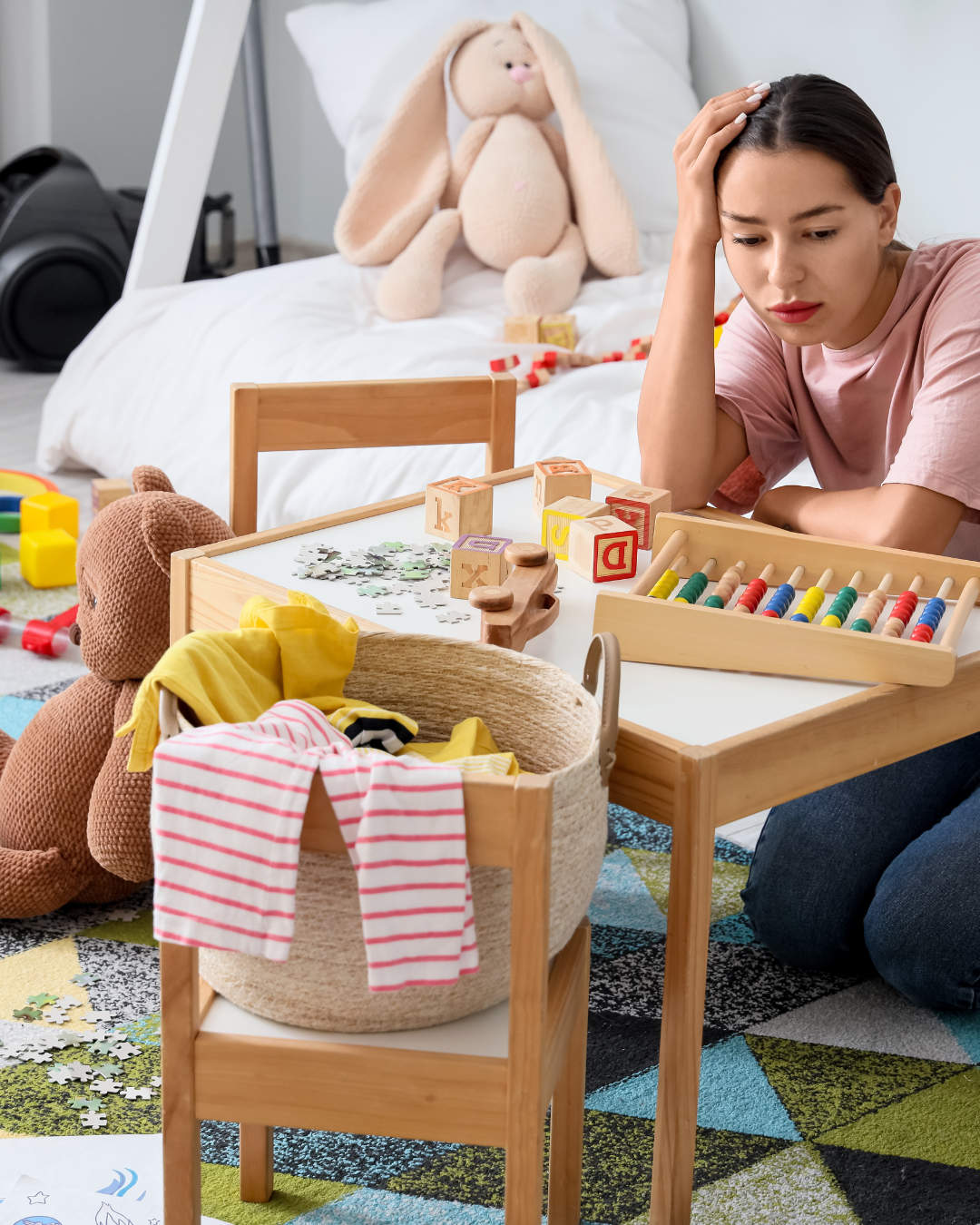
Exhausted mother holding baby in kitchen with hand on forehead, depicting parent burnout and capacity depletion

Sarah is a busy mother of three children under six years old. Her oldest is in kindergarten, her middle child is in a half-day preschool program and her infant is home with her. She also has a part-time job working from home as a virtual assistant three hours a day that she fits in during her baby's nap time. Being a mother is very important to Sarah and she tries to be a playful, engaged and patient parent. By four o'clock in the afternoon she's picked up her kids and has them home eating a snack. Sarah looks at the clock and realizes that she has three hours until her husband gets home and the bedtime chaos begins. She had planned to start prepping dinner earlier in the day but had a difficult time getting her baby down for their second nap. Now her baby is overtired and her other two kids are needing her attention. Sarah feels her jaw clench, she starts holding her breath without realizing it and the tension inside her body is building when she hears something smash. When she looks over at her kindergartener she sees that they just dropped a glass of water. The glass has cracked into a thousand tiny pieces all over the kitchen floor and there is water everywhere. She is flooded with panic, worrying immediately about preventing her kids from stepping on broken glass or slipping. The baby whines. Sarah turns to her six year old and yells "What are you doing?! You need to be more careful next time!". Her six year old's face distorts into sadness and the crying begins. Sarah's face gets hot and flushed and she feels anger and shame. She begins to ask herself: "What's wrong with me? It was just an accident, I am a terrible mom for yelling at her."

Now that you've read Sarah's story, check in with yourself. What are you feeling in your body? Does any of this sound familiar?

You're not a bad parent. You're not broken. You're experiencing parent burnout. And what you're really dealing with is something called diminished capacity.

What Capacity Actually Means

Capacity is the internal space you have to handle and respond to your daily lived and emotional experiences. Think of it like a bank account. When you make deposits the amount of money increases and every withdrawal whether large or small depletes it more and more. Large deposits like rest and exercise yield larger results. The same can be said for withdrawals. In the story above, Sarah's account balance is far below the minimum threshold.

Your nervous system works the same way. When your capacity is fuller, you can handle more unexpected challenges, more spills, sibling squabbles, and your partner's grumpy mood with relative calm. When your capacity is depleted, everything feels like too much because it is. (Want to understand more about how nervous system regulation works? Read about why regulation is the foundation of resilience.)

The Myth: Calm Parents Raise Calm Kids

Many parents believe that staying calm all the time is what creates regulated children. This sets up an impossible standard that leaves you feeling like a failure every time you lose your patience.

This misunderstanding shows up when you:

  • Suppress your frustration until you explode later

  • Feel deep shame after any moment of impatience

  • Believe your children need you to be perfect to feel safe

  • Think that needing breaks means you're not cut out for parenting

The pressure to maintain constant calm actually drains your capacity faster.

What's Really Happening When You're Burned Out

When you're operating with low capacity, your nervous system is already in a heightened state. You might not feel it consciously, but your body is holding tension, scanning for problems, and running on fumes.

By 4pm, after a full day of meeting everyone else's needs, your system has been gradually depleting. Every decision, every emotional regulation moment with your child, every task you've juggled has drawn from your internal reservoir.

When the glass breaks or the tantrum starts, it's not just that moment your nervous system is responding to. It's the accumulation of the entire day, maybe even the entire week. Your body is saying: "I don't have space for this right now."

The Reframe: Capacity Is Something You Can Build

Here's the shift: Capacity isn't fixed. You're not destined to always run on empty. You can intentionally build and protect your capacity through small, consistent practices that honor how your nervous system actually works.

Building capacity doesn't mean becoming superhuman. It means understanding what drains you, what replenishes you, and creating realistic micro-moments of restoration throughout your day.

What This Looks Like in Real Life

Notice Your Depletion Signals

Your body tells you when capacity is low, but you might miss the early signs. Start tuning into:

  • Jaw clenching or teeth grinding

  • Holding your breath or shallow breathing

  • Tension in your shoulders or neck

  • Feeling irritable over small things

  • Mental fog or difficulty making decisions

When you notice these signals, name them without judgment: "I'm feeling depleted right now. My capacity is low."

Quick Shifts When You're Overwhelmed

When you're already in that depleted place and need to shift quickly, try one of these body-based tools:

Cold water: Splash cold water on your face or hold an ice cube. Cold temperature helps calm your nervous system fast. Keep a cold pack in the freezer for these moments.

Gentle movement: Stretch your body, allow your neck to roll gently from side to side while breathing, squeeze your fists tight then release them, or do slow shoulder rolls. Even small movements help discharge the tension your body is holding.

Breathing: Make your exhale longer than your inhale. Try breathing in for 4 counts, out for 6 counts. Or simply sigh deeply a few times. Long exhales signal safety to your nervous system.

Release tension: Scrunch your shoulders up to your ears for 5 seconds, then let them drop. Notice the relief.

Create Micro-Restoration Moments

You don't need an hour at the spa. You need 30 seconds of intentional restoration, repeated throughout the day.

Try:

  • The doorway pause: Before entering the house after pickup, sit in the car for 30 seconds. Place your hand on your chest. Take three slow breaths.

  • The witching hour reset: Set a gentle alarm for your hardest time of day. When it goes off, step outside for 60 seconds or splash cold water on your face.

  • The sensory anchor: Keep a smooth stone or piece of small fidget in your pocket. When you feel depleted, hold it and focus on the texture for a few breaths.

Identify Your Capacity Drainers

Not all activities drain capacity equally. Common drainers for sensitive and neurodivergent parents include:

  • Back-to-back transitions without processing time

  • Sensory overload (noise, visual chaos, constant touching)

  • Decision fatigue from managing everyone's schedules

  • Emotional labor of anticipating everyone's needs

  • Masking or suppressing your authentic responses

Notice which situations consistently leave you depleted, then ask: "What's one small adjustment I could make here?"

Build in Small Pleasures

Rather than only intervening when you're already depleted, you can build your baseline capacity by noticing small moments of pleasure throughout your day.

The sun on your face. Your child's laugh. A sip of cold water. Let yourself pause and register it for even three seconds. You're training your nervous system to notice safety and pleasure, not just threats and demands.

Accept Your Limits Without Shame

When you're depleted and can't show up as the parent you want to be in that moment, fighting that reality drains even more capacity. Instead, try: "This is where I am right now. I'm depleted. That's real. I'm doing what I can with what I have."

This doesn't mean you like being depleted. It means you stop adding shame on top of the already difficult reality of being overwhelmed.

Repair With Yourself First

Here's what many parents miss: you can't truly repair with your child if you haven't repaired with yourself first.

After you yell at your six year old about the broken glass, the shame spiral begins. "What's wrong with me?" "I'm a terrible mom." This internal criticism doesn't just feel bad. It actively drains your capacity and makes authentic repair nearly impossible.

Self-compassion isn't indulgent. It's the foundation of genuine repair and future capacity. (Learn more about the science of self-compassion.)

Before you even talk to your child, pause and speak to yourself the way you would speak to a dear friend who just made the same mistake:

"I yelled because my nervous system was overwhelmed. I was depleted. That makes sense given everything I was holding. I'm not a terrible parent. I'm a human with limits who is doing their best."

Notice the difference between:

  • "I'm such a bad mom for yelling" (shame, which depletes capacity)

  • "I yelled because I was overwhelmed and didn't have the capacity to respond differently in that moment" (compassion, which creates space)

When you offer yourself understanding for your mistake, several things happen:

You model self-forgiveness for your children. They learn that mistakes don't define them.

You restore some capacity. Shame is one of the biggest capacity drainers. When you release it, even a little, you create internal space to actually be present for repair.

You can show up authentically. Your repair isn't coming from desperate guilt. It's coming from genuine reconnection, both with yourself and with your child.

The repair process becomes:

  1. Notice what happened: "I yelled at my child."

  2. Acknowledge your state: "I was depleted and overwhelmed."

  3. Offer yourself compassion: "That makes sense. I'm human."

  4. Take a breath. Feel your feet.

  5. Now repair with your child.

This isn't about excusing harmful behavior. It's about understanding that shame doesn't motivate change. Compassion does.

Repair With Your Child

When you do snap or yell, repair matters more than perfection. Once you're calmer:

"I'm sorry I yelled. I was feeling really overwhelmed and I didn't handle that well. Breaking the glass was an accident. You didn't do anything wrong. Let's clean it up together."

This models for your children that mistakes happen, feelings are real, and connection can be restored.

Build Systemic Supports

Individual practices help, but systemic support matters too. Ask yourself:

  • Is there one recurring task I could simplify or eliminate?

  • Could I simplify decisions by limiting my choices or deciding once, then stick with for as long as it makes sense?

  • Could I lower the bar on something that doesn't truly matter?

  • Is there one boundary I need to set to protect my energy?

  • Who in my support system could I reach out to?

Maybe dinner becomes simpler. Maybe you say no to one commitment. Maybe you ask your partner to handle bedtime twice a week. These aren't failures. They're strategic capacity-building decisions.

Sarah's Story Revisited

Remember Sarah from the beginning? Here's what happened after she learned about capacity:

She noticed that 4pm was consistently when she felt most depleted. Instead of pushing through, she started setting a timer at 3:45pm for a three-minute reset. She'd step outside, splash cold water on her face, or choose a gentle stretch that relieved tension. She practiced longer exhales and identified the path of least resistance like heating last night's leftovers instead of cooking something new to protect her energy while the kids had screen time.

She also simplified her 4-6pm expectations. Dinner became easier. She stopped trying to be "playful mom" during her lowest-capacity window and instead focused on safe, calm presence.

When the next glass broke, she still felt the surge of panic. But she had caught her depleted state earlier. She took a slow breath, felt her feet on the floor, and said, "Oh no, the glass broke. Let's keep everyone safe first." Her voice was steady, not because she felt perfectly calm, but because she had a bit more capacity to respond instead of react.

And when she did yell on another hard day? She practiced something new. Instead of spiraling into "I'm a terrible mother," she paused and said to herself: "I yelled because I was overwhelmed. That makes sense. I was depleted. I'm going to repair with my daughter, and I'm also going to be kind to myself about having limits."

The repair that followed felt different. More genuine. More connected. Because she had repaired with herself first.

The transformation wasn't dramatic. It was gradual. But over time, Sarah stopped hitting that 4pm breaking point quite so hard. And when she did hit it, she knew how to come back to herself with kindness.

Summary

Parent burnout is real, and capacity depletion is at its core. It's not something you push through with willpower. Your nervous system needs space, and that space gets depleted through the day-to-day work of parenting and managing life.

Building capacity happens through noticing your body's signals, using quick body-based tools when you're overwhelmed, creating micro-moments of restoration, identifying what drains you, and practicing repair with both your children and yourself.

The self-compassion piece isn't optional. It's central. When you extend the same kindness inward that you offer your children, you're actively building the capacity that makes genuine connection possible.

Take One Small Step

If this resonates, here's what you can try this week:

Set a timer for your hardest time of day. When it goes off, choose one small practice: three slow breaths with a longer exhale, splash cold water on your face, or simply notice how your body feels.

And the next time you make a mistake with your child, before you repair with them, pause and offer yourself one sentence of compassion: "I'm human. I have limits. That makes sense."

That small practice is how capacity begins to rebuild.

If you'd like support in building your capacity and moving from overwhelm toward steadier ground, I'd be glad to connect. You can explore my services or book a consultation. Let's find a pace that honors where you are, not where you think you should be.

Read More
Lisa Brooks Lisa Brooks

Regulation Is Resilience

Myth: Regulation means staying calm all the time.
Truth: Regulation is the capacity to move through many feelings and come back to steady enough.

As parents we often judge ourselves by how calm we stayed. Real regulation is not a permanent calm. It is a flexible nervous system that can rise to meet a moment and then return. Think of it like a dimmer switch rather than an on off button. We build this capacity in small realistic ways, not by forcing stillness.

Parent carrying sad child through a field and remaining regulated

As parents we often judge ourselves by how calm we stay with our kids. After losing our cool, we tend to feel immense shame and guilt. Our minds go to “I should have stayed calm, I’m traumatizing my child” or some version of that. We feel this deeply in our body and promise ourselves that we will stay calm next time. The belief that it is our job to stay ever present and calm through all of our children’s peaks and valleys is a narrative that doesn’t serve us or our children. Real regulation is not a permanent calm. It is a flexible nervous system that can rise to meet a moment and then return. Think of it like a dimmer switch rather than an on off button. We build this capacity in small realistic ways, not by forcing stillness.

What regulation looks like in real life

  • It has been a long tiring day and you set food down on the table. Your child yells that he doesn’t like what you made for dinner. You feel the frustration and anger rising and you notice your body tighten. You allow yourself to see and recognize the anger but you choose a moment of quiet instead of reaction. You slowly walk away and count to ten while filling your glass of water, allowing yourself to slowly diffuse then come back and reengage.

  • Your child melts down in the car, you feel your chest tighten, you drop your shoulders and soften your jaw, you play for music you enjoy and drive home.

  • Bedtime goes sideways, you feel the urge to snap, you step out for a sip of water, you come back and reconnect.

None of these examples are perfectly calm. They are regulated because you stayed connected to yourself enough to choose the next small step.

Why this matters for kids

Children learn regulation from our nervous systems first and our words second. When we model how to ride a wave of feeling and come back to steady enough, they learn that big feelings are survivable. This grows resilience in the whole family.

A simple practice to build capacity

  1. Name what you feel. Quietly say to yourself, overwhelmed or irritated or worried. Naming helps your brain organize the moment. It allows the metaphorical beach ball to rise to the surface of the water slowly instead of flying up by being pressed down too hard.

  2. Find one anchor. Try hand on heart, both feet on the floor, eyes closed or a longer exhale. Choose one you can do anywhere.

  3. Choose the next tiny step. Shorten your sentence. Lower your volume. Offer one choice instead of three.

  4. Repair if needed. If you snapped, circle back. I was stretched thin. I am here now. Let’s try again.

Small reps build regulation the way small reps build muscle. This is resilience.

For parents who feel deeply

If you are sensitive or neurodivergent, your nervous system may notice more and feel more. Nothing is wrong with you. Your sensitivity is information. Begin with one anchor and one tiny step. That is regulation.

If this landed for you: I send a short monthly reflection for parents who want steadier ground. One thought, one practice, one question. Join here and I will send the next one to your inbox.

Read More