
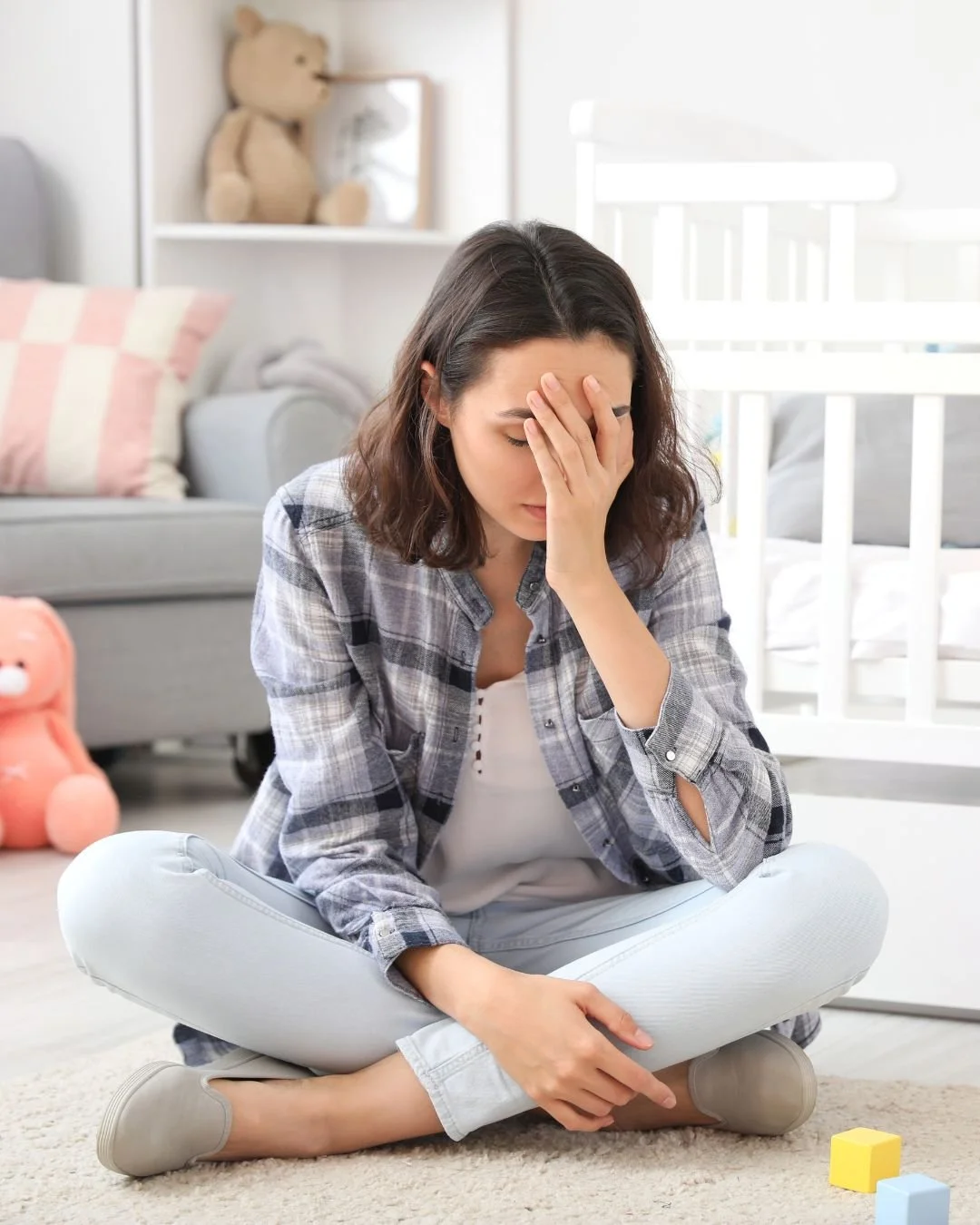
Why Am I Still Burned Out Years After COVID, Especially as a Parent?
Introduction
The other day, I heard myself say something that surprised me: "I think I'm still burned out from COVID."
COVID was years ago, wasn't it? Surely by now, we should have recovered. Life has resumed. Kids are back in school. We're not making sourdough anymore or doing Zoom calls with virtual backgrounds.
But as I sat with that statement, I realized something important. We went through a massive, world-altering trauma with no timeline, no roadmap, and no clear end. And when life "resumed," we were expected to just... continue. As if nothing fundamental had changed.
When COVID first hit and we went into lockdown, I had a two-year-old and a four-year-old. As a pediatric occupational therapist who was just beginning to reassemble the scattered pieces of my career after having two kids, I was working part-time as an independent contractor, driving around northern New Jersey with a trunk full of toys doing early intervention.
When the world told us to shut our doors and stay away from others, my hypervigilant mom brain went into full home-preschool mode. I was an early childhood development expert, and my way of coping was to do what I did best: be a pediatric OT to my kids.
This showed up in daily plans targeting fine motor, cognitive development, and gross motor skills in fun, playful, creative ways. Exploratory sensory bins. Reusable stickers on the window for pinch development and shoulder stabilization. Jumping around the room to different shapes and colors taped to the floor. Freeze dances. Colorful meals in creative arrangements during indoor picnics on our living room floor.
The list goes on.
There's a quote about millennial parenting being really intense that I can't remember exactly, but even reflecting back to those years creates a slow rise of exhaustion in my chest.
Nine or ten months in, after learning to make homemade tortillas and challah and making the same grilled cheese sandwiches every day for lunch, I was beyond survival mode. What at first seemed like an exciting pause in life to slow down, turn inward, and reconnect became a three-year undoing and unlearning of everything I believed I was supposed to be as a mom. A self-sacrificing martyr perfectionist. Not at keeping the house clean, but at being a fun, creative, educational mom.
As a Registered Clinical Counsellor now specializing in parent burnout and nervous system regulation, I've spent a lot of time reflecting on what actually happened to us during those years. Not just the logistics of closed schools and canceled playdates, but what happened to our nervous systems, our identities as parents, and our sense of who we thought we'd be.
If you've ever found yourself still exhausted in ways you can't quite explain, or grieving a version of parenting you thought you'd have, this might resonate.
Why does COVID burnout still affect parents years later?
COVID burnout lingers because it wasn't just acute stress with a clear endpoint. Parents lived in prolonged hypervigilance while carrying increased responsibility without relief or recovery time. When stress lasts years without resolution, your nervous system adapts to survive rather than returning to baseline. Then life resumed with full demands before capacity recovered, creating compounded exhaustion.
Here's what I've come to understand about why I'm still exhausted:
The demands didn't stop when COVID "ended."
I went from three years of hypervigilant, intensive, isolated parenting directly back to:
Full work expectations
School schedules and activities
Social obligations
Household management
All the regular demands of parenting older children with different needs
But my nervous system never recovered. My capacity never rebuilt.
So now I'm trying to meet normal life demands with a depleted system. And "normal" life for parents in 2026 was already overwhelming even when you're NOT recovering from years of sustained crisis.
This is what makes post-COVID parental burnout so insidious. You're not just tired from something that happened years ago. You're being asked to function at full capacity while still running on empty.
In biology, there's a concept called allostatic load. It's the wear and tear on your body and brain that accumulates from chronic stress. When you're in hypervigilant mode for extended periods without recovery, that load keeps building.
Because the pandemic lacked a clear finish line, many parents never exited the physiological state of fight-or-flight. We didn't just have a hard year. Our nervous systems stayed activated for three years. And then we were expected to immediately resume normal functioning.
When I hear myself say 'I'm still burned out from COVID,' what I actually mean is: I never recovered from COVID, and life kept demanding more. The exhaustion I feel now is compounded. The original depletion plus current demands plus no recovery time plus the expectation that I should be 'back to normal.
What were parents actually managing during those years?
Parents weren't just managing closed schools. They experienced role collapse. Becoming teachers, therapists, playmates, safety officers, and emotional regulators simultaneously while isolated from all support systems. For parents with professional training in child development, competence became a coping strategy that looked like thriving but was actually highly functional survival mode.
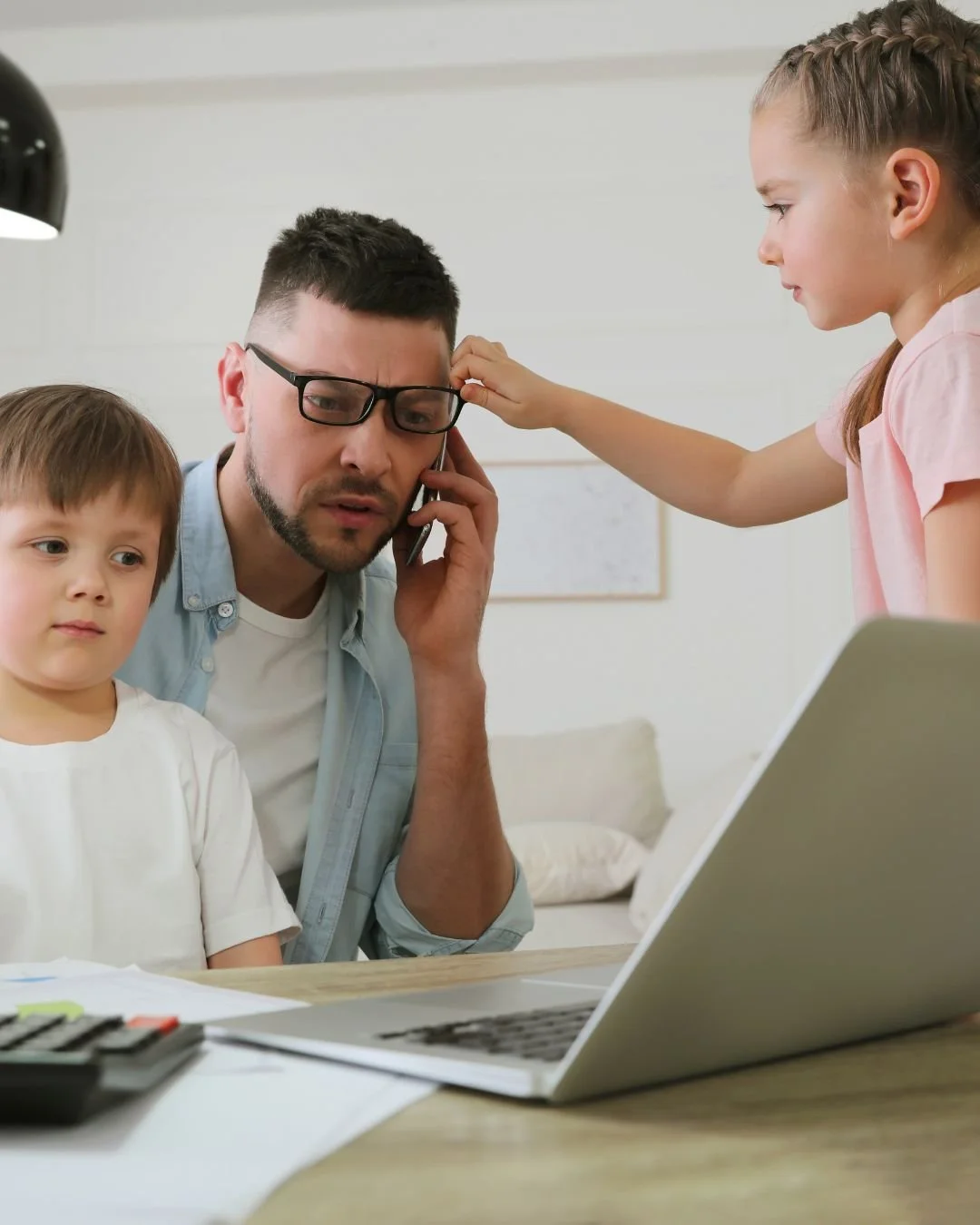
Let me be specific about what actually happened during COVID, because I think it helps to see it written out:
Role overload: In occupational therapy, we talk about what happens when too many roles collapse into one person without boundaries. During COVID, parents weren't just caregivers. We were:
Teachers (managing remote learning or creating curriculum)
Therapists (regulating everyone's big feelings)
Entertainment directors (filling hours without outside activities)
Safety officers (calculating risk for every decision)
Food service (three meals a day, every day, no breaks)
Occupational therapists (trying to support development in isolation)
Loss of all support systems: Everything that typically gives parents breathing room disappeared overnight. Grandparents. Friends. Babysitters. Preschool. Playdates. Library storytimes. The playground. Gym childcare. Those weren't luxuries. They were the infrastructure that made parenting sustainable.
Sustained hypervigilance: You were constantly scanning for threat. Wiping down groceries. Monitoring symptoms. Calculating risk. Reading conflicting information. Making decisions with incomplete data. Your nervous system never got to rest.
Constantly moving goalposts: Just when you adjusted to one set of rules, they changed. Two weeks turned into months turned into years. Your brain never got to complete the stress cycle because it never actually ended.
Intensive parenting on steroids: Many millennial parents were already operating within what sociologists call "intensive parenting" culture. The belief that parents, particularly mothers, must be their child's primary source of stimulation, education, and entertainment. The pandemic took that already unsustainable pressure and multiplied it by ten.
For those of us with training in early childhood development, education, or healthcare, professional competence became our coping strategy. If we could create the "right" environment (stimulating, regulated, educational), we could protect our children from harm.
This wasn't irrational. It was adaptive. But adaptation has a cost.
I thought I was doing what any good parent would do. What I didn't realize was that I was operating in survival mode disguised as competence. The creative activities, the daily plans, the educational focus. It all looked like thriving. But I was running on fumes and adrenaline.
Why am I trying to function on empty while everyone acts like life is normal?
You're not struggling because current demands are unreasonable. You're struggling because you're trying to meet reasonable demands with a nervous system that's still depleted from years of crisis without recovery time. Society resumed "productivity as usual" without acknowledging that parents' internal infrastructure had been dismantled.
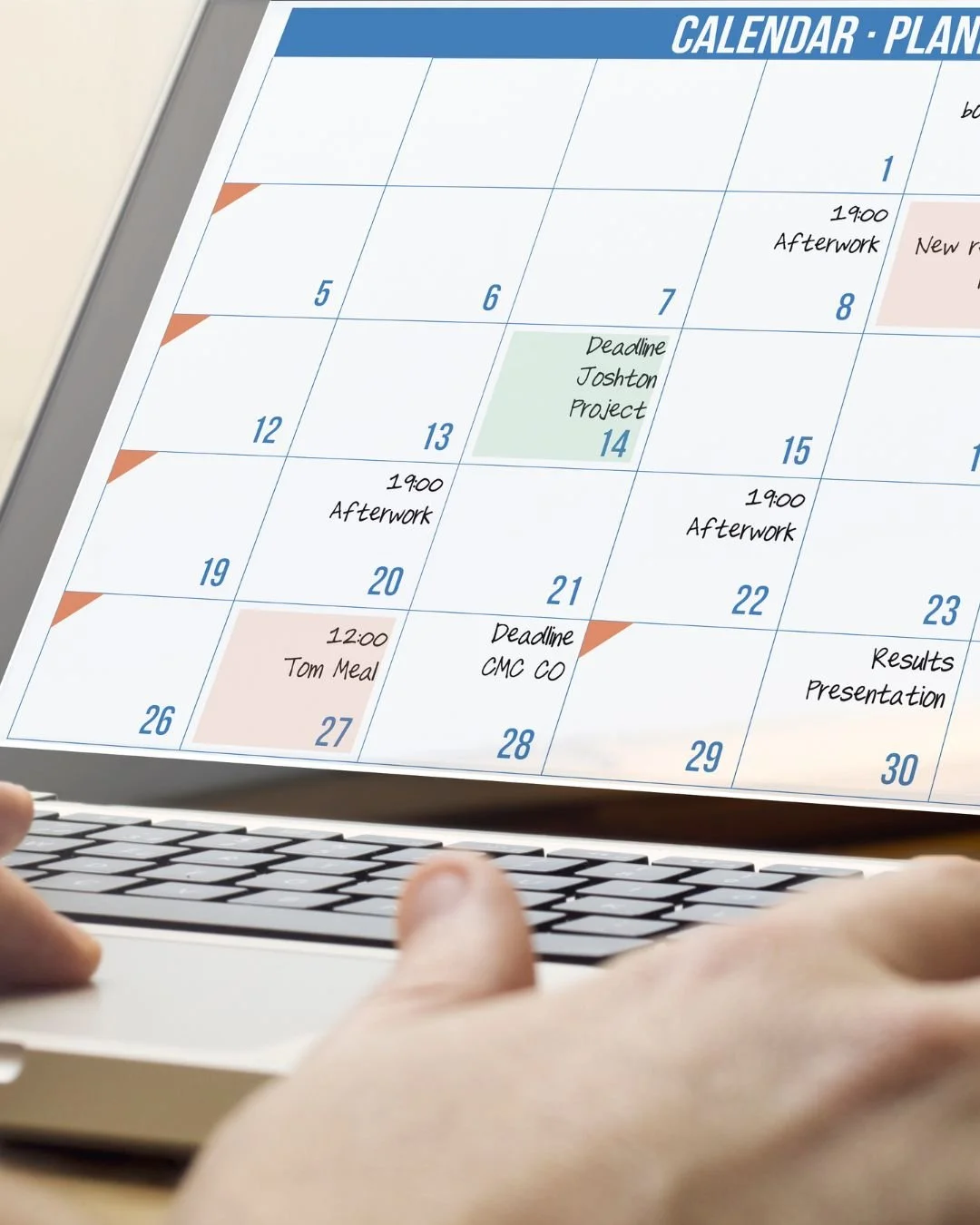
Here's what people don't understand when they say, "But life is back to normal now."
Yes, the acute crisis ended. But my capacity didn't magically restore itself.
I'm parenting two kids who are now older with completely different needs.
I'm running a full-time clinical practice.
I'm managing a household.
I'm maintaining relationships.
I'm trying to be present in my community.
These are normal adult responsibilities. Not excessive. Not unreasonable.
But I'm trying to meet them with a system that was drained to zero and never got filled back up.
Think of it this way: Before COVID, maybe you had 100 units of energy and life required 80 units. You had buffer space.
During COVID, you used all 100 units plus went into debt, bringing you down to 40 units of capacity.
Now life requires those same 80 units, but you only have 40 to give.
And here's the compounding factor: When you're depleted, everything costs MORE energy. Decision-making takes more energy. Emotional regulation takes more energy. Basic tasks take more energy.
So those same 80 units of demand actually require 100 units of energy when you're in a depleted state.
You're trying to give 100 when you only have 40. Of course everything feels impossible.
I used to think I just needed to be more efficient or better at time management. Now I understand: I'm not disorganized. I'm depleted while being expected to maintain the same output. The math doesn't work.
Why did the world move on as if nothing happened?
When schools reopened and restrictions lifted, society resumed productivity expectations without acknowledging what parents had been through. This is what some researchers call institutional gaslighting. When systems return to "normal" without recognizing that the people operating within those systems have been fundamentally changed and need recovery time.
This is the part that makes me angry in ways I'm still processing.
We went through a massive, life-changing, traumatic world event. We were free-falling into the unknown every single day with no timeline and no roadmap.
And then life "resumed" as if nothing had happened. As if we should just... continue.
The structures of society (work, school, extracurriculars, social obligations) went back to operating at full speed without any acknowledgment that parents had been completely undone.
There was no collective "let's take six months to recover" moment.
No workplace policies that recognized what had happened.
No school systems that acknowledged kids (and parents) might need slower reentry.
No cultural permission to still be processing.
Instead, we got: "Great, back to normal! Why are you still struggling?"
This disconnect between what we experienced and what was acknowledged creates a particular kind of crazy-making exhaustion. You know something massive happened. Your body knows. But the world around you is acting like it didn't.
Even now, when I find myself reflecting on screen time I wish my kids didn't have but am too exhausted to limit, or when I hear other moms describe creative things they're doing with their kids, I feel this small, quiet grief. Not jealousy. Grief. For the version of myself I thought I'd be on a regular basis. And my first thought is always: How does she still have the energy?
What is this grief I keep feeling about the parent I thought I'd be?
This is what psychologists call ambiguous loss. Grieving not a person, but a version of yourself and a timeline that never existed. For parents who were highly engaged during COVID, there's grief about not being able to sustain that intensity now. Your brain is actually protecting you from returning to an unsustainable state.
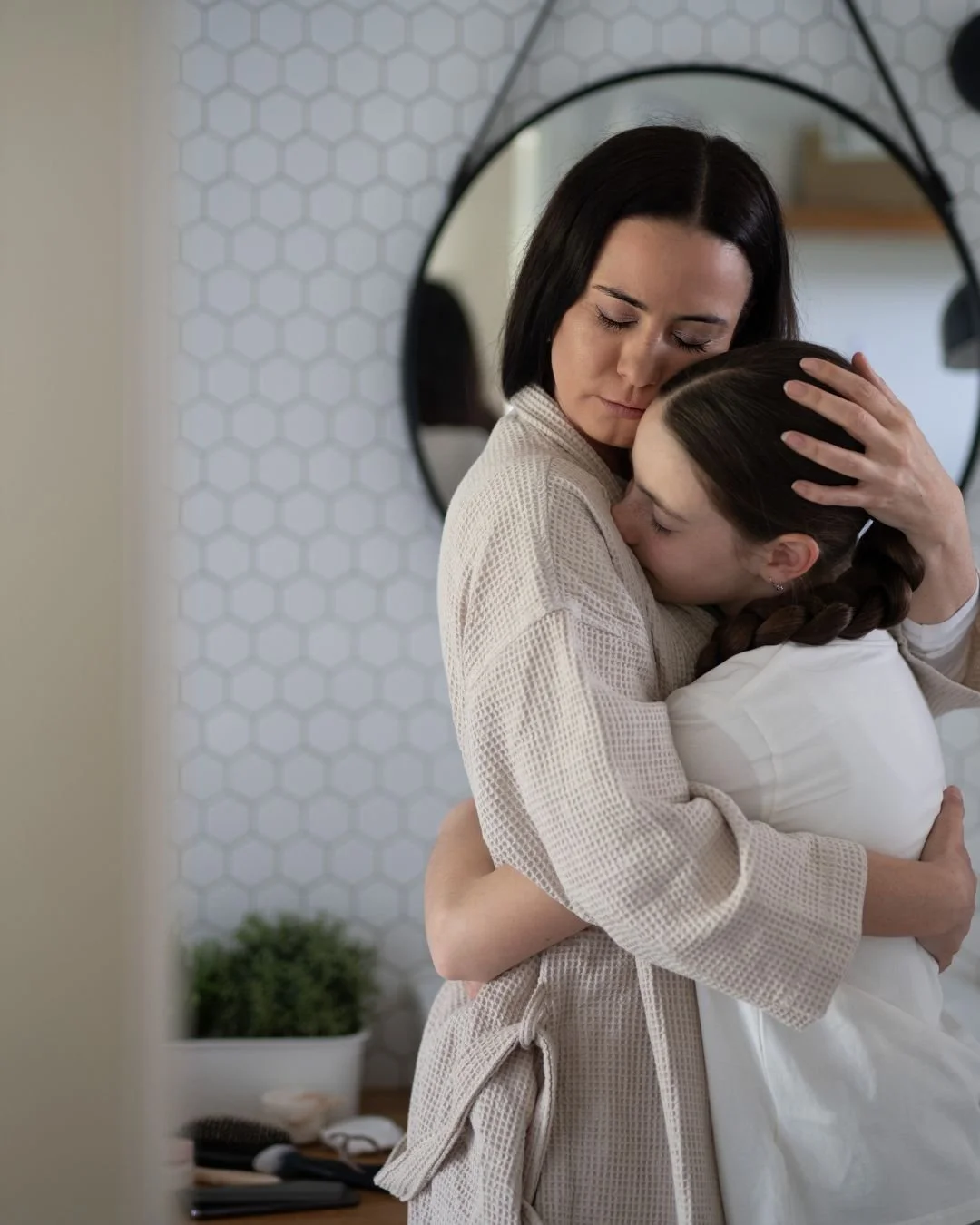
This grief is tender and confusing because you're not grieving something concrete. You're grieving an idea. An expectation. A version of parenting you thought would be your baseline.
I thought I'd be the mom who did creative activities regularly. Who had energy for sensory play and educational games. Who limited screen time naturally because we'd be too busy exploring and learning together.
During COVID, that mom showed up. Fueled by necessity and love and professional expertise and nowhere else to channel my energy.
But she showed up in crisis mode. And crisis mode isn't sustainable.
Here's what I've realized in my clinical work with parents: When you see other parents doing creative things now and feel exhausted, it's often because your brain associates that creativity with the survival energy you had to use during lockdown.
Your current exhaustion around intensive parenting isn't laziness. It's your psyche setting a functional boundary to prevent you from returning to that martyrdom state.
The fact that you're "too exhausted" to be the fun OT mom today is actually your body practicing the self-compassion you learned during those years. You're choosing presence over performance.
But that doesn't erase the grief. Both things are true.
My self-reckoning during COVID actually brought about a more gentle perspective on self-compassion. I'm learning to parent in ways that don't require self-abandonment. But I still have small moments of grieving what I thought things should be like. The growth and the grief coexist. The self-compassion and the mourning. And I'm learning that's okay.
Why does everyone else seem fine but I'm still struggling?
You're comparing your internal experience to others' external presentation. Many parents are still struggling but not talking about it because culturally we've moved on. Also, different families had vastly different experiences during COVID. Support systems, work flexibility, living situations, and pre-existing capacity all affected how people experienced and recovered from those years.
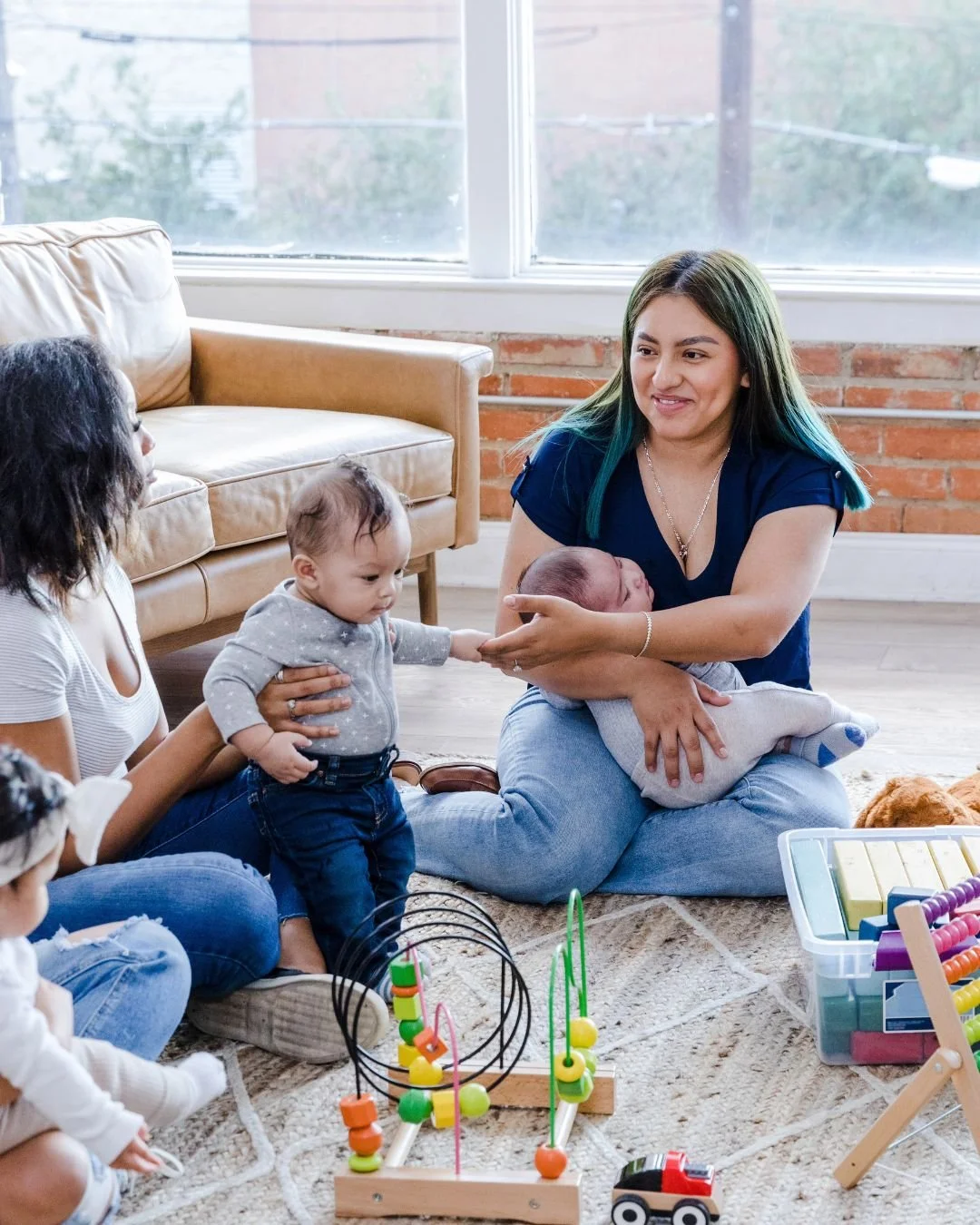
This is one of the questions I hear most often from parents in my practice: "Why does it seem like everyone else bounced back?"
Here's what I want you to know: They probably didn't.
What you're seeing is:
People's public-facing coping
Different family circumstances you're not aware of
Different nervous system baselines and recovery trajectories
Cultural pressure to perform "fine-ness"
Clinical context: Some families had:
One child vs. multiple children (massive capacity difference)
Older kids vs. toddlers (different demands)
Two parents at home vs. single parenting
Financial security vs. economic stress
Flexible work vs. rigid expectations
Nearby family support vs. complete isolation
Larger living spaces vs. small apartments
Neurodivergent family members vs. neurotypical household
These variables dramatically affected both the acute experience and the recovery trajectory.
Also, many parents are struggling but not naming it anymore because society has moved on. When everyone around you is acting like things are normal, you start to wonder if you're the only one still affected.
You're not.
I see parents in my practice every week who are still recovering. They often start sessions with 'I don't know why I'm still so tired' or 'Everyone else seems fine.' The relief when I say 'actually, many parents are still feeling this' is palpable.
FAQ Section
Q: Why does everything feel harder now than it did before COVID, even though the crisis is over?
Because you're trying to meet the same demands with significantly less capacity. During COVID, you depleted your reserves completely. Then life resumed immediately without recovery time. So now you're operating in a chronic deficit while being expected to function normally.
Think of it this way: Before COVID, you had 100 units of energy and life required 80 units. You had buffer.
During COVID, you used all 100 units plus went into debt, bringing you down to 40 units of capacity.
Now life requires those same 80 units, but you only have 40 to give.
And here's the compounding factor: When you're depleted, everything costs MORE energy. Decision-making takes more energy. Emotional regulation takes more energy. Basic tasks take more energy.
So those same 80 units of demand actually require 100 units of energy when you're depleted. You're trying to give 100 when you only have 40. Of course everything feels harder. This isn't about willpower. It's basic nervous system math that doesn't work.
Q: How do I explain to my partner or family why I'm still affected when they think I should be "over it"?
You might try: "We lived through years of sustained hypervigilance with no recovery time. My nervous system is still processing that, even though the acute crisis ended."
You could also say: "My capacity was drained to zero during those years, and life immediately resumed with full demands before I recovered. I'm trying to function normally while still depleted."
Some people won't understand because they had different experiences or are processing it differently. That's frustrating, but it doesn't mean your experience isn't valid.
You don't owe anyone a detailed explanation of your nervous system state. But if you want to communicate it, focus on capacity and recovery time rather than feelings, which can sound more subjective.
Q: Will I ever have the creative, engaged parenting energy I had during lockdown?
Maybe. But also, do you want to?
That energy was fueled by crisis, isolation, and nowhere else to channel your attention. It looked like thriving, but it was actually survival mode.
Your current lower energy for intensive parenting might actually be your body protecting you from returning to an unsustainable state.
Some parents find they can access creative energy again once they've processed the trauma and rebuilt capacity. Others discover they don't actually want to parent that intensively anymore, and that's okay.
The goal isn't to get back to 2020. It's to build something sustainable now.
Q: Are other parents really still struggling with this, or is it just me?
You're not alone. Not even close.
Research on parental burnout has continued well beyond the height of the pandemic, particularly for parents who had young children during lockdowns.
In my clinical practice, I see parents every single week who are still recovering. Many of them start sessions thinking they're the only one still affected.
The reason it feels like you're alone is because culturally, we've moved on. There's pressure to perform "fine-ness." So people are struggling quietly.
But you're not behind. You're not broken. You're recovering from something massive that we were never meant to carry alone.
If you've read this and found yourself thinking, "Yes, this is exactly what I've been feeling," I want you to know you're not alone.
We went through something massive. We kept our children safe, fed, regulated, and developing through years of uncertainty while our own nervous systems were completely activated. And then life immediately resumed with the same demands before our capacity recovered.
The exhaustion you feel now isn't just about what happened during COVID. It's about trying to meet current demands while still depleted from those years. This is compounded exhaustion. And it's real.
Even now, I still find myself having small moments of grieving what I thought things should be like. The mom I thought I'd be. The energy I thought I'd have. The ease I expected.
But my self-reckoning during COVID also brought about something I didn't expect: a more gentle perspective. A releasing of the self-sacrificing martyr role. An understanding that sustainable parenting matters more than impressive parenting.
Both things are true. The growth and the grief. The self-compassion and the mourning. The relief and the exhaustion.
I just wanted to get that out there as a reflection that could maybe honor what others feel but that we barely name anymore.
In my next post, I'll share what actually helps when you're this depleted. Not generic self-care advice, but what supports real nervous system recovery and what sustainable parenting can look like from here.

If this resonates and you'd like support understanding what's happening in your nervous system, I work with overwhelmed parents throughout BC. You can learn more about my approach to parent support here.
About the Author
Lisa Brooks, M.Sc. OT, RCC, is a Registered Clinical Counsellor and licensed occupational therapist specializing in parent burnout, nervous system regulation, and neurodivergent family support. With extensive experience as a pediatric OT in early intervention and school settings, and lived experience parenting through COVID with young children, she brings both clinical expertise and deep understanding to her work with depleted parents throughout British Columbia. Learn more at Nurtured Foundations or schedule a free consultation.
