
Why Do Kids Become More Dysregulated During the Holiays?

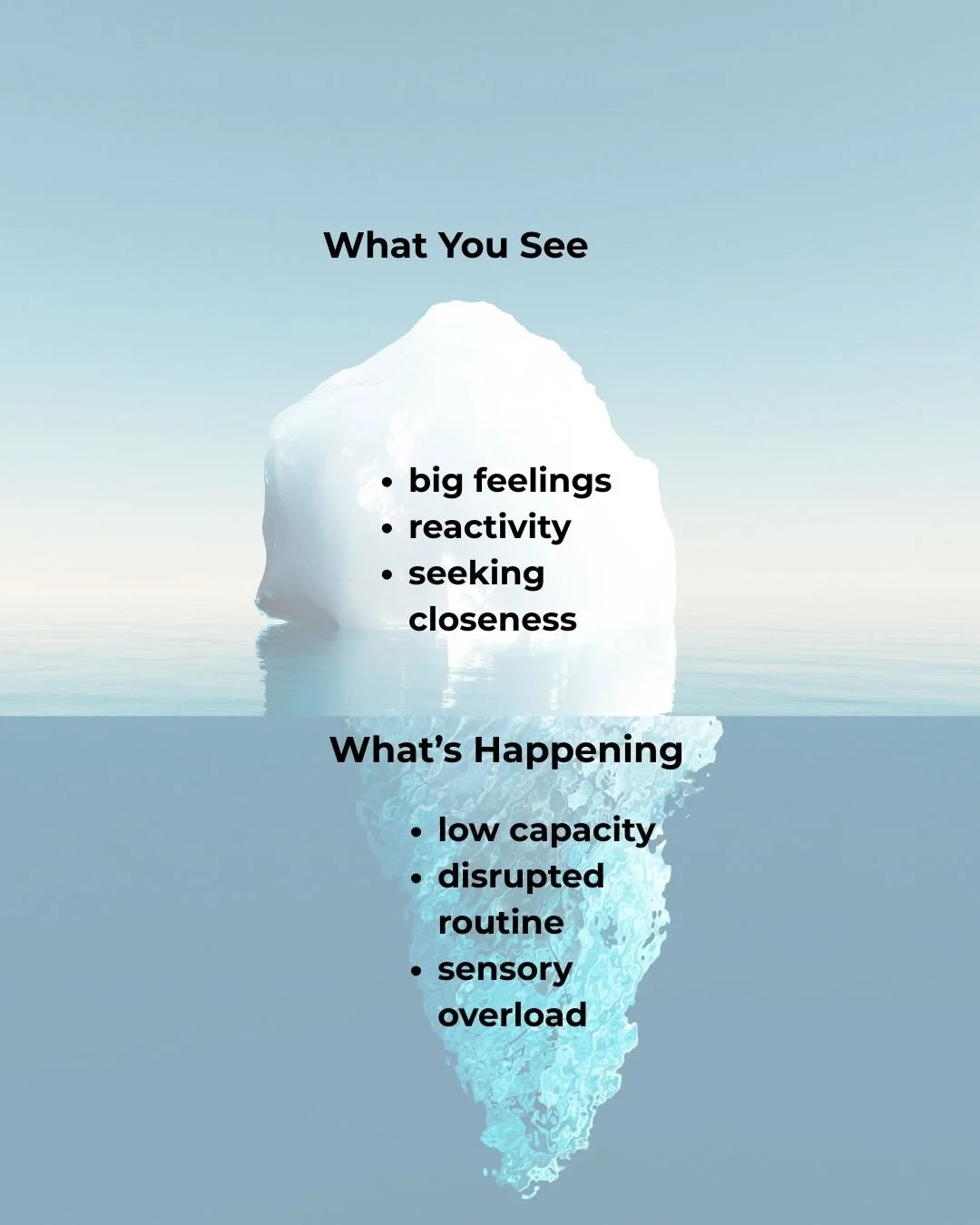
Kids become more dysregulated during the holidays because their routines disappear, the sensory world gets louder and busier, and their developing systems lose the steady rhythm they rely on to feel anchored. When life speeds up this way, their capacity drains faster, which leads to bigger feelings, quicker reactions, and a need to stay physically closer to their safe person.
Introduction
The holidays look magical. Sparkly lights, special treats, family traditions. But underneath the surface, many parents tell me they feel stretched thin long before the season even begins. And kids feel it too, even if they cannot name what is happening inside them.
As a Registered Clinical Counselor and with a masters in Occupational Therapy and a decade of experience in pediatrics, who supports families with neurodivergent children in Vancouver, I see this pattern every year. Kids who usually cope well suddenly react faster. Mornings feel harder. Bedtime falls apart. Parents wonder what changed, and whether they are missing something important.
Here is what I want you to know: nothing is wrong with your child and nothing is wrong with your parenting. Research on child development consistently shows that children rely on rhythm, predictability, and familiar routines to stay regulated. When those supports disappear, their internal capacity drops. This is not misbehavior. It is a nervous system under strain.
This is supported by the work of Dr. Dan Siegel, whose research on neurodevelopment highlights how children need predictable rhythms and relational anchors to manage stress and transitions.
In this article, I walk you through why kids become more dysregulated during the holidays, what it looks like in real life, and small adjustments that help families move through this season with more steadiness and connection.
Why do kids struggle to stay regulated during the holidays?
Kids become more dysregulated during the holidays because their nervous systems depend on predictability and rhythm, and this season offers very little of either. More stimulation, more transitions, more social demands, and more emotional intensity all drain their capacity faster than it can refill.
The prefrontal cortex, which supports emotional regulation, flexible thinking, and impulse control, is still developing throughout childhood and adolescence. Children rely on external structure to fill the gaps. When that structure shifts, their internal systems become less steady.
You may notice:
quicker emotional reactions
irritability or clinginess
difficulty with transitions
sensory overload
more conflict with siblings
less flexibility
behaviour that looks intentional but is actually fatigue
What This Can Look Like
Vignette 1: Preschool / Micro-shifts / Internal Bank Account
December arrives and suddenly every day at preschool feels different. Pajama day. Holiday art. Concert practice. Cookie decorating. A surprise visitor. All small things on paper, but a lot of shifts for a developing system.
Your four-year-old who usually moves through the morning with ease now refuses to get dressed. They melt down over socks that “feel wrong.” Their teacher gently mentions they needed more support during transitions.
You stand there wondering what changed. There was no single big moment. But actually, everything small changed. The familiar Tuesday rhythm they rely on vanished. Circle time looked different. Snack happened later. The room felt busier. Each tiny shift acted like a withdrawal from their internal energy bank account. By the end of the week, their balance is low.
They are not dramatic or difficult. They are depleted. Their system has been working overtime to keep up.

2. Is Holiday Behavior Misbehavior or Capacity?
Challenging holiday behavior is not misbehavior. It is diminished capacity.
In the families I support, holiday stress often shows up not as “acting out,” but as a child whose system is struggling to keep up. Research on self-regulation and developmental stress tells us that when demands increase and predictability decreases, nervous systems shift into survival mode.
According to research on childhood development, behavior is communication. When kids cry more easily, react faster, or need you closer, they are signaling overload, not defiance.
When adults shift from “They should know better” to “Their system is overwhelmed,” everything softens. Compassion becomes easier. Shame falls away. And connection becomes the anchor again.
3. Why Do Kids Need Rhythm and Predictability to Stay Regulated?
Predictability is one of the most powerful regulators for children. Research consistently shows that routines help organize attention, support transitions, and reduce cognitive load. When children know what comes next, their nervous system can settle.
During the holidays, even small changes create uncertainty. Bedtimes shift. Meals move around. School routines dissolve. New activities replace familiar ones. These are real demands on a developing system.
What This Can Look Like
Vignette 2: Older Child / Winter Concert / Sudden Fall-Apart
Your eight-year-old has been adjusting so well to school this fall. They know their teacher’s routines. They found their rhythm with friends. They have been practicing for the winter concert for weeks, humming the songs at home and feeling proud about their part.
The day of the concert arrives and they seem excited until they are not. Out of nowhere, they dissolve into tears in the car. They say their stomach hurts. They refuse to get out when you arrive. You feel stunned because everything had seemed so smooth.
This is the moment many parents wonder, “Where did this come from?” But for kids, excitement and overwhelm can live right next to each other. The extra rehearsals, the changes in schedule, the louder classrooms, and the building anticipation have all been small withdrawals from their internal capacity. Their system is stretched thin, even if they looked steady on the outside.
They are not falling apart because they are unprepared or dramatic. They are reaching the natural limit of a body that has been carrying more than it could show.
4. What Can Parents Do to Support Regulation During the Holidays?
You do not need to fix the holidays or prevent every meltdown. Your job is to help anchor your child when the world feels fast.
Here are practical supports I often use with families:
Keep familiar micro-routines where you can.
Small anchors matter: same breakfast, same bedtime rhythm, same goodbye.
Protect sleep as much as possible.
Sleep fuels emotional and sensory capacity.
Build in quiet pockets.
Between events, add rest. Slow down transitions.
Offer extra co-regulation through connection, touch, and warmth.
Your presence helps their system settle.
Lower expectations for outings or transitions.
December has different demands. Match what is realistic.
Name what is happening without judgment.
“Your body feels tired. That was a lot. I am right here.”
5. Does This Happen Only in December?
No. Children often become more dysregulated during any season that disrupts rhythm and predictability. This includes:
• travel
• visitors
• schedule changes
• extracurricular intensity
• developmental leaps
• major transitions
Predictability creates safety. Routine anchors kids in a fast world. The holidays simply compress more change into a short window.
Frequently Asked Questions
-
Less predictability and more stimulation lower emotional capacity.
-
Closeness helps their system feel safe when the environment is overwhelming.
-
Stay steady, reduce stimulation, and support recovery.
-
Often yes. Sensory changes and unpredictability can feel more intense.
-
Choose events that match your child’s capacity and add recovery time.
-
A lot. Small shifts impact emotional and sensory tolerance.
-
Mealtime rhythm, bedtime cues, downtime, and predictable transitions.
-
Very normal. Kids respond to real changes around them.
-
Yes. Capacity returns as routines return.
Conclusion
Kids do not become more difficult during the holidays. They become more human. Their systems are absorbing more than usual, and they need softness, anchoring, and realistic expectations. When we understand what is happening beneath the surface, we parent from steadiness instead of stress.
They do not need perfect conditions. They need you.
If you are navigating holiday overwhelm or want support with parenting, regulation, or neurodivergent family dynamics, you can book a counseling session or join my newsletter for weekly guidance and nervous system supports.
Author
Lisa Brooks, M.S. OTR/L, RCC
Registered Clinical Counselor supporting parents, families, and neurodivergent adults in Vancouver. She is a pediatric occupational therapist licensed in New York and New Jersey.
Specializing in capacity building, sensory processing, and regulation support.
Learn more or work with me at Nurtured Foundations.
Instagram: @nurturedcounselling
