
Why Do the Holidays Hit ADHD Women So Hard?
By Lisa Brooks, M.S. OTR/L, Registered Clinical Counsellor - Vancouver BC
TL;DR
You are not imagining it. Holidays create the perfect storm for ADHD brains.
Sensory overload, emotional labor, disrupted routines, and shorter days hit capacity fast.
Shame and masking increase around family, work events, and old roles.
Shutdown is not a personality flaw but a nervous system response.
Understanding why this happens is the first step to compassion and relief.
The holidays are supposed to feel warm and magical. But if you are a woman with ADHD, the season often brings something very different: overwhelm, sensory overload, emotional exhaustion, and the pressure to seem fine while everything speeds up around you.
I am Lisa Brooks, a Registered Clinical Counsellor (RCC) and Occupational Therapist (OTR/L) specializing in ADHD women, nervous system regulation, and sensory-informed therapy. In my 14 years working with sensitive and neurodivergent adults, I see the same pattern every winter: ADHD women hit a breaking point long before the season is over.
You are not failing. You are not too sensitive. You are not bad at holidays. Your brain and nervous system are working overtime in environments that were not designed with ADHD neurobiology in mind.
This post explains why ADHD women experience holiday overwhelm differently and what is actually happening in your body and brain. In Part Two, you will learn exactly how to support your capacity during this season.

Why Does Holiday Overwhelm Hit ADHD Women So Hard?
A certain level of holiday overwhelm can hit anyone, but for women with ADHD, this season is particularly impactful. ADHD brains seek novelty but thrive on predictability, rhythm, and routine. December is anything but. Shorter days, holiday events, work deadlines, social demands, and sensory input from sights, sounds, and smells all pile on at once. The combination depletes capacity fast.
Less Sunlight and Shorter Days Decrease Capacity
Winter reduces natural morning light, which disrupts circadian rhythms. ADHD brains already tend toward delayed sleep cycles, so darker mornings worsen sleep, mood, and task initiation. Research shows that people with ADHD are particularly vulnerable to circadian rhythm disruptions, which can amplify symptoms of inattention, emotional dysregulation, and fatigue.
You are not imagining it. You are not simply less motivated or disciplined. Your ADHD brain genuinely has less to work with when natural light decreases. The shorter days affect dopamine production, which directly impacts your ability to wake up, focus, and get started on things. December feels heavier, slower, and more draining because your nervous system is using more energy just to stay regulated.
Sensory Overload Everywhere
Crowds, lights, noise, scents, movement, and constant stimulation overload sensory systems faster in ADHD brains. What looks normal to others can hit ADHD women like a tidal wave.
Scenario: The Costco Trip
Late November, Monday afternoon. You need one final Costco run before the holidays. You know how overstimulating it gets, but you go anyway.
You get stuck at the cookie sample station behind three stopped carts. The same holiday song loops for the 20th time. Your sweater suddenly feels too hot and itchy. Your cart overflows, but you forgot something and there is no turning back.
At checkout, you pick the wrong line. Someone ahead has three carts. That is when you remember the one thing you absolutely needed. You should have written it down.
Your chest tightens. Your jaw clenches. You just want to leave.
That feeling is awful and completely understandable. While the chaos would frustrate anyone, ADHD brains process sensory information differently. Imagine your brain like a highway. This amount of information for an ADHD brain is like a ten-car pileup in every direction. You can only prepare so much, but the reality can still overwhelm you. When the environment throws too much at you at once, your nervous system moves into protection mode.

Executive Function Demands Multiply
On a regular day, you struggle to get through your to-do list. The holidays add so much more, not just in boxes to check off, but in energetic demands. Every single task has its own list. Giving gifts requires deciding what to get, finding time to shop, purchasing, wrapping, writing the card, and bringing the right gift to the right person at the right event. That is just one item.
For many women with ADHD, the brain works harder to do everyday tasks like planning, staying organized, switching between activities, and remembering steps. Your mental energy runs out faster than others expect.
Studies show that when emotions get intense - stress, frustration, overwhelm - the part of the brain responsible for focus and planning (the prefrontal cortex) becomes less active, while emotional centers become more active. This makes it much harder to start tasks, stay focused, or keep track of things, even when you are motivated.
Research also demonstrates that adults with ADHD experience significantly higher rates of stress-induced executive function impairment compared to neurotypical adults. The holiday season essentially creates the exact conditions that shut down executive functioning.
When things fall through the cracks, it is not about being lazy or careless. It is about how your brain uses energy and how quickly that energy gets drained. It is a capacity issue, not a character issue.
Emotional Labor Quietly Triples
"Make it magical." "Keep everyone happy." "Remember all the details."
Mothers often carry the bulk of invisible emotional workload for families, and if you are a mom with ADHD, your brain works even harder. You think ahead, anticipate needs, smooth tensions, and make sure everyone feels seen. This drains capacity faster than any single task.
Here is what makes this more complex for women with ADHD: many spent their entire childhoods learning to hide their symptoms. Girls with ADHD are expected to be organized, calm, and put-together in ways boys are not. When you struggled with disorganization, impulsivity, or feeling scattered, those traits were not supposed to be there. So you learned to mask them, to work twice as hard to appear like you had it together.
This creates a painful feedback loop. You grow up feeling like you are not enough because of traits you could not control. You internalize the message that something is wrong with you. Then you spend decades trying to fill a gap you were never meant to fill, working harder to meet expectations never designed for your brain. You lose touch with your own needs because you focus on compensating, performing, and proving.
This is why ADHD in women is often misdiagnosed as anxiety or depression. The symptoms are there, but turned inward. You hold chaos inside while appearing calm outside. During the holidays, when demands triple and pressure to perform intensifies, that internal system collapses faster.
In my years working with women with ADHD, I have seen how much energy goes into holding space for others while your own needs go unmet. Emotional labor is real work. Emotional labor while masking a neurodevelopmental condition is depleting.
As a Registered Clinical Counsellor with 14 years specializing in ADHD women and nervous system regulation, I often tell clients that holidays are essentially an executive function triathlon with spectators. You are expected to perform while everyone watches, and your brain is running three demanding tasks at once with no break.
Why Do ADHD Women Mask More Around Family and Coworkers?
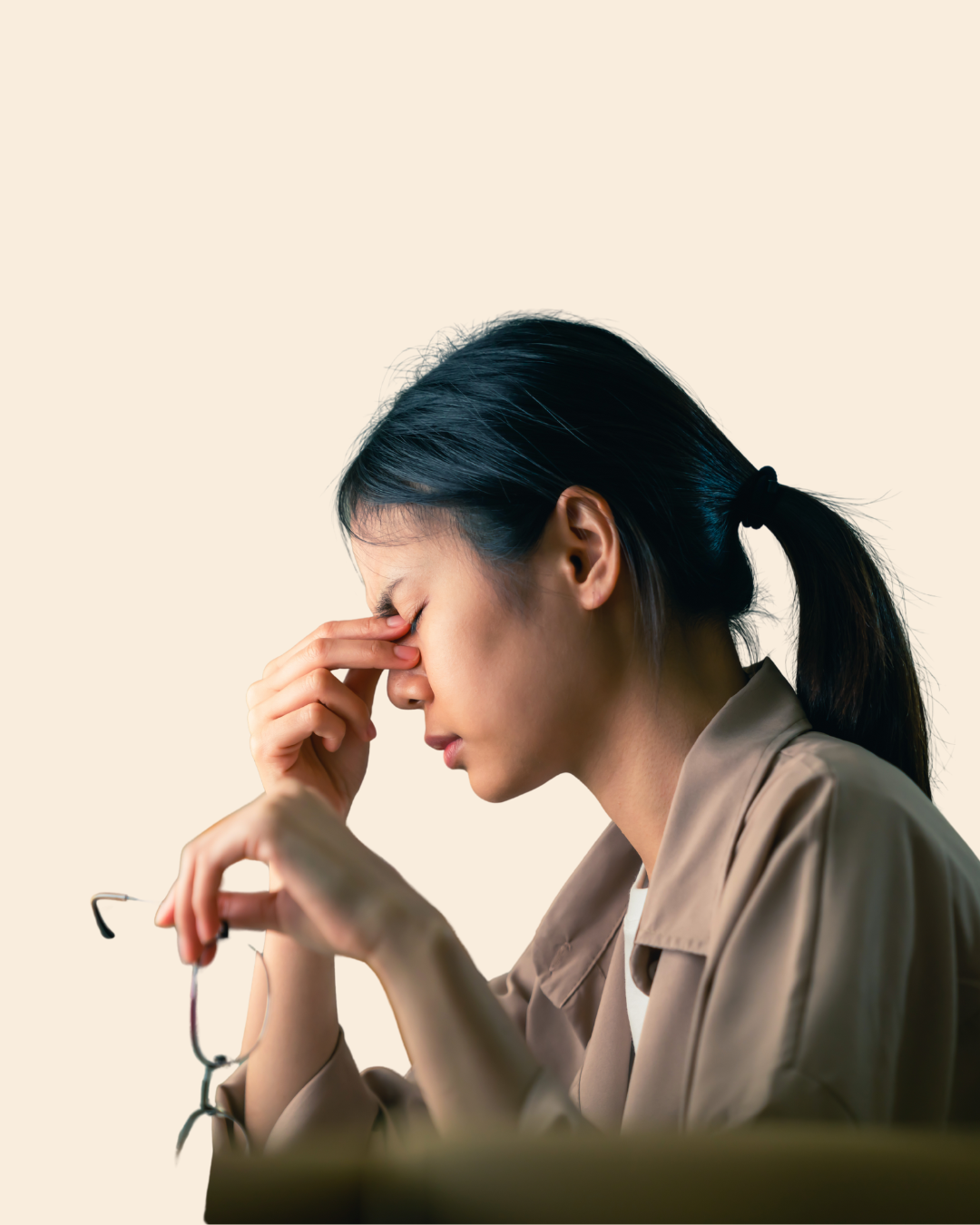
Masking increases during holidays because old roles, expectations, and unresolved narratives reactivate. ADHD women perform competence, calmness, and emotional regulation to avoid criticism or misunderstanding. This uses enormous energy and leads to rapid shutdown when capacity runs out.
Old Family Roles Reactivate Instantly
For many women, holidays bring back roles like "the sensitive one," "the messy one," or "the disorganized one." Even if you have grown, your body remembers these roles.
When you walk into your childhood home, your nervous system can slip back into old patterns. You might notice yourself apologizing more, second-guessing yourself, or trying extra hard to prove you have it together. This is not weakness. This is your system trying to stay safe in an environment where you once felt judged.
Social Pressure Requires Enormous Internal Resources
For ADHD women, social situations require active regulation. You track conversations, manage sensory input, read social cues, and suppress impulses all at once. Smiling, small talk, emotional availability, remembering details, and monitoring yourself drain the system quickly.
Research on ADHD and social cognition shows that adults with ADHD use significantly more cognitive resources during social interactions than neurotypical adults, leading to faster mental fatigue.
By the time you leave an event, you may feel completely drained even though you "just talked to people." That exhaustion is real. You used significant cognitive and emotional energy to stay present and regulated.
Fawning Becomes a Default Survival Strategy
Fawning may look like people-pleasing on the surface but it is a protective nervous system response where you automatically try to appease, accommodate, or make others comfortable to avoid conflict or rejection. Unlike the well-known fight, flight, or freeze responses, fawning involves over-functioning for others while abandoning your own needs. ADHD women often do this without realizing it, especially around people whose opinions shaped them.
When your nervous system perceives threat, even emotional threat like judgment or criticism, fawning can kick in. You might say yes when you mean no, downplay your own needs, or overextend yourself to keep the peace. This is not about being fake. This is about survival.
Scenario: The Work Holiday Party
Work has been exhausting. Your supervisor keeps changing deadlines. You are anxious about your upcoming performance review. Last time, the feedback felt crushing.
The criticism landed hard, not because you are overly sensitive, but because research supports how intense and painful rejection sensitivity dysphoria (RSD) is for women with ADHD. When feedback feels like rejection, it triggers a full nervous system response: shame, panic, withdrawal.
Now you dread the company holiday party. Part of you knows you should go. Another part wants to avoid it entirely. You worry about saying the wrong thing, being judged, feeling out of place.
This is RSD in action. Your brain tries to protect you from potential rejection by keeping you away from situations where it might happen. The problem is, avoidance reinforces the fear.
In my practice working with late-diagnosed ADHD women, I have found that many spent decades masking as the good girl and trying hard to fit in, all while keeping their dysregulation and chaos on the inside. Getting diagnosed later in life can create space for self-compassion, but old patterns still get triggered around the holidays, especially around people-pleasing and feeling accepted by others.

Why Do ADHD Women Feel Shame During the Holidays?
Shame shows up when expectations exceed capacity. ADHD women often compare themselves to neurotypical functioning, feel pressure to perform emotional labor, and anticipate judgment from family. Holidays amplify these triggers, making shame a predictable nervous system response.
The Comparison Trap
Social media, relatives, and cultural expectations make ADHD women feel behind, disorganized, or "not enough." You see others hosting elaborate dinners, decorating beautifully, managing everything with ease. What you do not see is their struggle, overwhelm, or capacity.
Comparison is not neutral. It activates shame by making you feel like you are failing at something everyone else seems to handle. But you are not everyone else. You have a different nervous system, different sensory needs, different capacity. There is no right way to do holidays.
Fear of Disappointing Others
Old wounds resurface: "You are late again." "You forgot again."
Even neutral comments can activate shame when the nervous system is already overloaded. For ADHD women who spent years masking and trying to be the good girl, the fear of disappointing others runs deep.
This is not about being overly sensitive. This is about carrying years of feedback that suggested you were not enough as you were. When you are already at capacity, even small comments can feel enormous.
Emotional Labor Plus Executive Function Equals Shame Spiral
The desire to create connection collides with depletion, and shame fills the gap. You want to show up fully. You want to be present, organized, and on top of everything. But when your capacity is drained, things fall apart. Then shame tells you it is your fault.
Scenario: Bringing Baking to a Family Gathering
You love baking. This year, you said you would bring dessert. You have been working hard on it, trying to make it perfect.
But you are also managing work, kids, life. The morning of the gathering, you are running late. Again. Still finishing because you wanted it fresh. Your mom always comments when you are late.
When you arrive, she says, "You are here. We were starting to worry." It sounds neutral but lands like criticism. That familiar knot forms in your stomach. Shame whispers, "You can never get it right."
But here is what shame does not tell you: you worked hard. You showed up. You brought something made with care. Being late does not erase your effort or your love.

Why Do I Shut Down, Withdraw, or Go Quiet at Holiday Events?
Shutdown is a dorsal vagal state where the nervous system protects you from further overwhelm. It feels like going mute, zoning out, losing words, or disappearing inward. This is not rudeness. It is your system conserving energy after reaching its limit.
Polyvagal Perspective on Shutdown
Shutdown is the nervous system's way of preventing collapse. According to polyvagal theory, when the body perceives ongoing threat or overwhelm without a way out, it moves into a dorsal vagal state. This is the freeze or shut down response.
ADHD women often enter shutdown after prolonged sensory load, masking, or emotional effort. Your system is not being difficult. It is protecting you.
When Sensory Overload Meets Emotional Exhaustion
By the time you arrive at an event, capacity may already be depleted. You spent energy getting ready, managing transitions, preparing food, and mentally bracing for social demands.
Once there, noise, lights, conversations, and expectations pile on. At some point, your nervous system hits its limit. Shutdown is not a choice. It is what happens when there is no more capacity left.
Masking Often Ends in Freeze
Once performance energy runs out, the nervous system moves into freeze or shutdown. You have been working so hard to seem fine, to keep up, to be present. But masking takes enormous energy. When that energy runs out, your system pulls you inward to protect you.
You might notice yourself going quiet, staring off, or feeling like you are watching the event from behind glass. This is not antisocial. This is your nervous system saying, "We need to conserve energy now."
As a trauma-informed therapist specializing in nervous system regulation, I want ADHD women to understand that shutdown is not rude. It is protective. Your body is doing exactly what it needs to do to keep you safe.

Frequently Asked Questions About ADHD Women and the Holidays
-
Emotional dysregulation intensifies when capacity is low. ADHD brains have fewer cognitive resources for emotional regulation when sensory load, executive function demands, and social pressure increase. Your nervous system is overwhelmed.
-
Yes. Loving people and feeling overwhelmed by them can both be true. ADHD women often experience anticipatory anxiety before gatherings because past experiences taught your nervous system to brace for judgment, overstimulation, or exhausting emotional labor.
-
Working memory is one of the executive functions most affected by ADHD. When stress and sensory load increase, working memory capacity decreases. The stress hormone cortisol impairs working memory. When your system is overwhelmed, forgetting things is a predictable response, not a personal failure.
-
This is deeply personal. Some women find sharing their diagnosis helps family understand. Others find it opens them to more judgment or dismissiveness. Trust your gut. You know your family best.
-
You might say, "I am feeling really overstimulated right now and need to step away for a bit," or, "I am hitting my limit and need some quiet." Most people respond well to honest, simple explanations. If they do not, that is about them, not you.
-
Guilt shows up when your experience does not match cultural expectations. You have been told holidays should feel joyful, but for ADHD women they often feel exhausting. There is no rule that says you have to love this season. It is okay to just survive it.
-
For some women, ADHD medication helps manage executive function demands and emotional regulation during high stress times. This is a conversation to have with your prescriber. Medication is not a magic fix, but it can provide support.
-
Yes. Protecting your nervous system is not selfish. If skipping an event means you can show up better for the ones that matter most, that is a valid choice. You do not owe anyone your depletion.
-
Comparison is hard to stop completely, but you can practice noticing it without judgment. When you catch yourself comparing, gently remind yourself: "I am not them. I have different capacity. I am doing my best." Over time, this builds self-compassion.
-
Not always. As you learn more about your nervous system, your sensory needs, and your capacity, holidays can become more manageable. It takes time, practice, and self-compassion. But yes, it can get easier.
You are not failing. You are navigating a season that overwhelms ADHD neurobiology. The lights, noise, expectations, emotional labor, and social pressure create a perfect storm that drains capacity fast. Shutdown, shame, and masking are not personality flaws. They are nervous system responses.
Understanding why holiday overwhelm for ADHD women hits so hard is the first step toward self-compassion and relief. In Part Two, I share practical, body-based, and compassionate strategies to help you protect your capacity this season.
If you are an ADHD woman feeling overwhelmed, depleted, or stuck in cycles of shame and shutdown, I would be honored to support you. I offer nervous system-informed, sensory-aware therapy that helps ADHD women build capacity, reduce overwhelm, and reclaim their energy.
Lisa Brooks is a Registered Clinical Counsellor (RCC) and Occupational Therapist (OTR/L) specializing in ADHD women, nervous system regulation, and sensory-informed therapy. With over 14 years of experience supporting sensitive and neurodivergent adults, Lisa helps clients move from chronic overwhelm and shame toward calm, confidence, and self-trust. Her approach integrates attachment-based counseling with body-based regulation strategies grounded in neuroscience and compassion. Lisa practices in British Columbia and works with clients who are ready to understand their nervous systems, honor their capacity, and build sustainable rhythms. Learn more at www.nurturedfoundations.com
